


For years, the beverage industry has talked about convergence. In 2027, one of North America’s largest trade show partnerships may finally prove it. For more than half a decade, Baron Mag has consistently highlighted the need to collaborate.
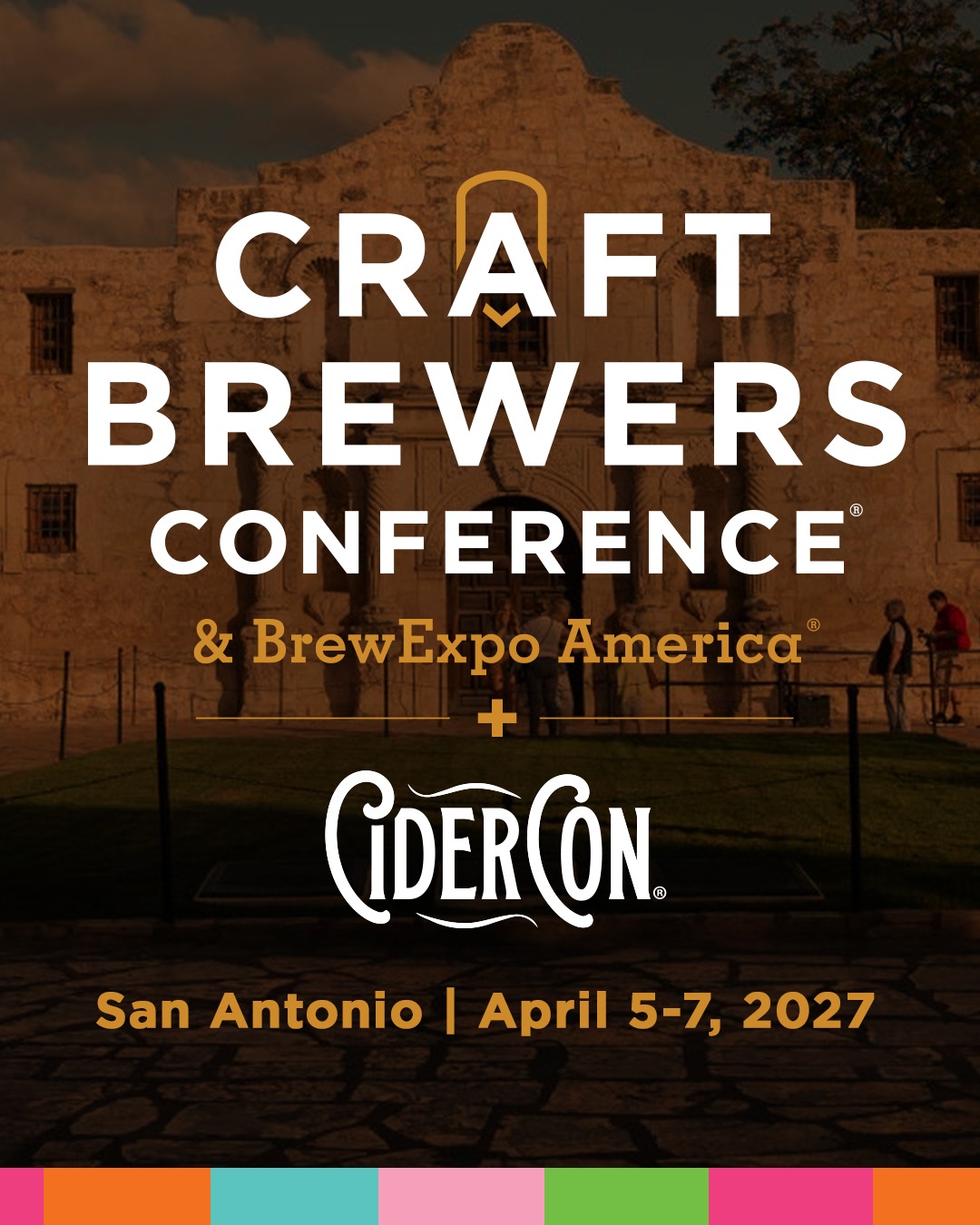
The announcement that the Craft Brewers Conference & BrewExpo America and CiderCon will co-locate in San Antonio, Texas, from April 5–7, 2027, may appear at first glance to be a logistical decision. Two large industry events sharing a city, infrastructure, and timing. A practical move in an era when travel budgets are tighter and exhibitors are scrutinizing every dollar spent.
But beneath the announcement lies something much larger.
It represents a recognition that the beverage industry no longer operates in isolated categories.
Beer is no longer just beer.
Cider is no longer just cider.
Today’s producers are increasingly making beer, cider, hard tea, hard lemonade, ready-to-drink cocktails, hop water, non-alcoholic beverages, energy drinks, functional drinks, kombucha, and products that would have been nearly impossible to categorize a decade ago.
The industry’s supply chains are converging. Distribution channels are converging. Consumer behavior is converging.
Perhaps most importantly, the conversations that shape the future of beverage alcohol are converging as well.
For more than five years, Baron Mag has argued that the industry’s biggest opportunity is not finding new ways to separate itself, but finding better ways to work together.
The CBC and CiderCon announcement may be one of the clearest signs yet that the market is finally catching up.
An Industry Built on Categories
For decades, beverage alcohol organized itself around strict boundaries.
Beer had its conferences.
Wine had its conferences.
Cider had its conferences.
Spirits had theirs.
Suppliers divided their sales teams by category. Distributors built portfolios around category expertise. Industry media often covered markets separately.
The structure made sense when products remained relatively distinct.
A brewer brewed beer.
A cidermaker made cider.
A distiller produced spirits.
Each category had its own equipment suppliers, ingredients, technical challenges, educational needs, and regulatory frameworks.
Then the market changed.
Consumers stopped caring about categories.
They cared about occasions.
A consumer might drink a hazy IPA on Friday, a hard cider on Saturday afternoon, a canned margarita at a concert, and a non-alcoholic botanical beverage after a workout.
They move fluidly across categories.
The industry increasingly does the same.
The Rise of the Beverage Company
The most successful independent producers today are no longer simply breweries or cideries.
They are beverage companies.
Visit almost any progressive brewery in North America, and the menu tells the story.
Beer remains important, but it often sits alongside:
- Non-alcoholic beer
- Hop water
- Kombucha
- Hard seltzer
- Hard tea
- Ready-to-drink cocktails
- Coffee beverages
- Energy drinks
- Sparkling waters
What began as diversification has become a survival strategy.
Margins are tighter.
Consumer preferences evolve faster.
Retail shelf space is more competitive.
Producers need flexibility.
A brewery launching a hard tea today often faces many of the same operational questions as a cidery developing a canned cocktail.
The suppliers serving them increasingly overlap.
The distributors selling them increasingly overlap.
The technology platforms supporting them increasingly overlap.
So why shouldn’t the trade shows overlap, too?
The Economics of Collaboration
Trade shows remain one of the industry’s most valuable business tools.
But they have also become more expensive.
Travel costs have risen dramatically.
Hotel rates continue climbing.
Freight costs remain elevated.
Exhibitors face increasing pressure to justify every event on their calendar.
For suppliers, attending multiple events targeting adjacent beverage categories often means duplicating costs.
Multiple booths.
Multiple shipping arrangements.
Multiple travel budgets.
Multiple sales teams.
At a time when margins are under pressure across the industry, these expenses matter.
Co-located events create efficiencies.
One trip.
One booth setup.
One logistics operation.
Multiple audiences.
The result is not simply cost reduction.
It is a larger and more dynamic business ecosystem.
A packaging supplier serving breweries may discover opportunities in cider.
A canning technology provider may connect with RTD producers.
A logistics company may uncover new partnerships across beverage categories.
The return on investment increases for everyone involved.
The Supplier Perspective
Perhaps the biggest beneficiaries of greater trade show collaboration are suppliers.
Walk any major trade show floor today, and you’ll notice something interesting.
Many suppliers are already category agnostic.
A can manufacturer doesn’t care whether the liquid inside is beer, cider, sparkling water, kombucha, or a cocktail.
A label printer doesn’t care.
A software platform doesn’t care.
A logistics provider doesn’t care.
A quality-control laboratory doesn’t care.
The challenges facing beverage producers increasingly transcend category boundaries.
Inventory management.
Forecasting.
Supply chain visibility.
E-commerce.
Compliance.
Data analytics.
Packaging innovation.
Operational efficiency.
These are beverage industry challenges.
Not beer challenges.
Not cider challenges.
Not spirits challenges.
Just beverage challenges.
The events serving those industries need to reflect that reality.
The Distribution Revolution
Perhaps nowhere is convergence more obvious than in distribution.
The traditional three-tier system was largely built around category specialization.
Today, distributors are becoming beverage portfolio managers.
Many now carry products that span:
- Beer
- Cider
- Wine
- RTDs
- Hard seltzers
- Non-alcoholic beverages
- Functional beverages
The modern distributor’s challenge is no longer simply moving beer.
It is managing increasingly diverse portfolios while helping retailers navigate changing consumer preferences.
That means conversations occurring at CBC are increasingly relevant to cidermakers.
And conversations happening at CiderCon increasingly matter to brewers.
The walls separating categories are becoming harder to justify.
Technology Is Accelerating the Shift
Technology may be the strongest argument for industry collaboration.
The modern beverage company operates on data.
Sales forecasting.
Inventory management.
Route optimization.
Customer relationship management.
Production planning.
Business intelligence.
Platforms serving breweries today often serve cideries tomorrow and RTD producers the next day.
The software doesn’t care what is inside the package.
It cares about operational efficiency.
Companies such as distribution platforms, sales-management systems, inventory solutions, and e-commerce providers increasingly work across every beverage category.
Trade shows that remain narrowly focused risk missing where innovation is actually happening.
Because increasingly, innovation is not category-specific.
It is operational.
The Canadian Perspective
This trend is particularly relevant in Canada.
For years, Canadian beverage producers have operated in relatively fragmented ecosystems.
Beer associations held beer events.
Cidermakers gathered separately.
Distillers built their own conferences.
Non-alcoholic beverage producers often found themselves outside traditional industry structures entirely.
Yet the businesses themselves were already collaborating.
Breweries launched RTDs.
Cidermakers experimented with hybrid products.
Distilleries entered canned cocktails.
Non-alcoholic producers partnered with traditional alcohol brands.
The market evolved faster than the events serving it.
At Baron Mag, we’ve spent years documenting these overlaps.
The same suppliers appear repeatedly across industries.
The same logistical challenges surface regardless of category.
The same questions around growth, distribution, exportation, staffing, technology, and sustainability affect everyone.
The need for more collaborative industry gatherings has been obvious for some time.
What Baron Mag Has Been Saying for Five Years
For more than half a decade, Baron Mag has consistently highlighted a simple reality:
The beverage industry talks less than it should.
Not because people are unwilling.
Because the structures often keep conversations separated.
A brewer may never attend a cidery conference.
A kombucha producer may never attend a brewing event.
A packaging supplier may spend the year moving between dozens of isolated gatherings.
Yet everyone faces remarkably similar challenges.
Talent shortages.
Distribution challenges.
Margin pressure.
Export opportunities.
Technology adoption.
Consumer education.
Retail evolution.
The more fragmented the conversation becomes, the harder it is for solutions to spread.
Collaboration is not merely about networking.
It is about accelerating innovation.
When industries speak to one another, ideas move faster.
Problems get solved faster.
Costs go down.
Opportunities emerge.
A New Era of Beverage Events
The CBC and CiderCon partnership may signal something larger than a single event.
It may represent the beginning of a broader shift in how beverage industries gather.
The future may not be giant, generic expos where every category loses its identity.
The announcement wisely avoids that mistake.
Both organizations have emphasized that each event will maintain its own educational programming, community culture, and unique identity.
That distinction matters.
People attend industry events because they want category-specific expertise.
A cidermaker still needs cider-focused education.
A brewer still needs brewing-focused technical content.
The goal is not homogenization.
The goal is connection.
Shared infrastructure.
Shared networking opportunities.
Shared supplier ecosystems.
Shared business conversations.
Distinct communities.
That balance may prove to be the winning formula.
What Comes Next?
The bigger question is whether others will follow.
Could brewing conferences collaborate more closely with non-alcoholic beverage events?
Could food and beverage expos create stronger integration?
Could technology conferences serving beverage producers connect more directly with manufacturing events?
Could suppliers play a larger role in facilitating conversations across categories?
The answer increasingly appears to be yes.
Because the market itself is already moving there.
The companies growing fastest today often exist between traditional categories.
The suppliers creating the most value often work across categories.
The consumers driving demand certainly do not think in categories.
The events serving them shouldn’t either.
Beyond Beer, Beyond Cider
The San Antonio announcement is ultimately about more than logistics.
It is about recognizing what the beverage industry has become.
An interconnected ecosystem.
A network of producers, suppliers, distributors, technology companies, retailers, and service providers is navigating similar challenges.
The future belongs to industries that share knowledge rather than guard it.
That collaborates rather than competing unnecessarily.
That understanding growth increasingly happens at the intersections.
For years, collaboration was discussed as an ideal.
In 2027, it will become infrastructure.
And for suppliers, producers, distributors, and technology providers trying to do more with less, that may be one of the most important developments the industry has seen in years.
The beverage industry has spent decades organizing itself around differences.
The next decade may be defined by discovering how much it actually has in common.
What do you think? [email protected]

