

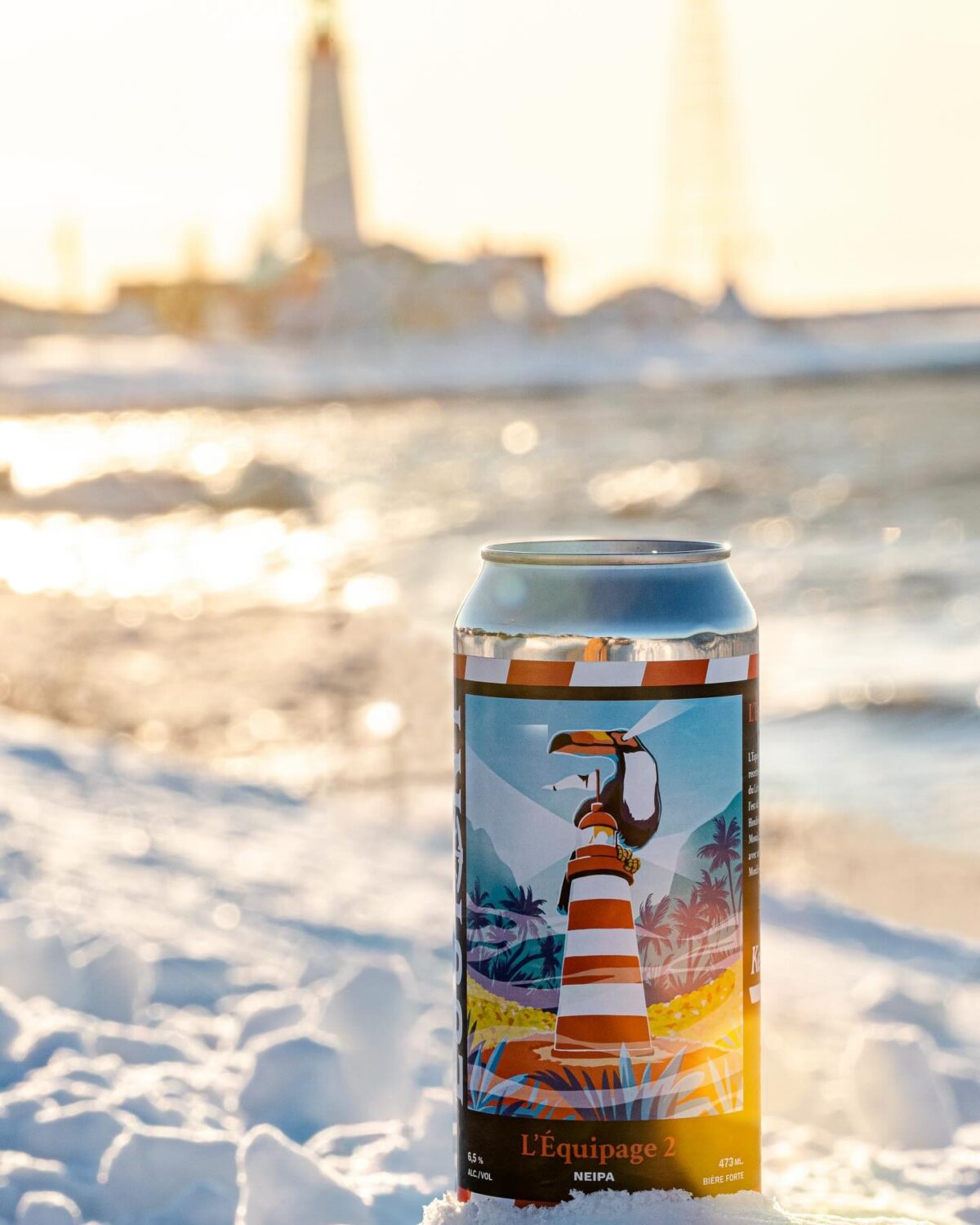

Powered by Innomalt | Crafting Exceptional Malts
In the early years of the craft beer boom, scale was the implicit goal. Breweries expanded distribution territories, multiplied SKUs, and chased visibility across increasingly crowded retail shelves. Growth was synonymous with geographic reach.
Today, that model is under strain. Rising costs, saturated markets, and shifting consumer behavior are forcing a reassessment of what growth actually means.
In Rimouski, a coastal city in eastern Québec, Octant Microbrasserie offers a compelling counterpoint. Rather than pursuing expansion, the brewery has doubled down on locality—prioritizing depth over breadth, stability over scale.
Its trajectory is not an anomaly. It may, in fact, be a preview of what comes next for the industry.

From Expansion to Consolidation
The first decade of the Québec craft beer movement was defined by acceleration. Inspired by pioneers such as Pit Caribou and Le Naufrageur, a new generation of brewers entered the market with a clear ambition: to produce better beer and distribute it widely.
When Octant was founded eight years ago, the prevailing logic was still relatively straightforward. A brewery could succeed with a core lineup of stable products—often five or six beers—distributed across a growing network of specialty retailers and bars.
The founders of Octant followed this script. Their initial vision was deliberately restrained: a handful of beers rooted in traditional styles, produced with limited resources and distributed modestly.
Yet within a few years, the market shifted.
The rise of New England IPAs, rapid product rotation, and the influence of digital platforms such as Untappd accelerated the pace of innovation. Novelty became a currency. Breweries were expected to release new beers constantly, often at the expense of consistency.
For many, this model proved unsustainable.
The Limits of Novelty
Octant’s experience reflects a broader industry realization: novelty has diminishing returns.
While experimental releases can generate short-term attention, they rarely build long-term loyalty—particularly in smaller markets. In Rimouski, Octant observed a pattern that contradicts prevailing assumptions:
Customers returned, repeatedly, to familiar products.
Rather than chasing trends indefinitely, the brewery recalibrated. It maintained a diversified portfolio—including IPAs and more experimental offerings—but re-centered its strategy around refining its core beers.
This approach aligns with a more mature stage of market development. As consumers become more knowledgeable, they often shift from exploration to preference consolidation.
In economic terms, the market transitions from expansion to optimization.

The Geography of Craft Beer
Perhaps the most significant strategic decision made by Octant was its retreat from external distribution.
At a time when many breweries still view geographic expansion as a measure of success, Octant concluded that distribution beyond its immediate region was no longer efficient.
The reasoning is straightforward:
- Increased competition has reduced shelf visibility
- Logistics costs have risen
- Margins on distant sales are thin
- Operational complexity is disproportionately high for small teams
For a two-person operation, the opportunity cost is considerable. Time spent managing external accounts is time not spent improving the product or strengthening local relationships.
The result is a decisive shift toward what might be described as territorial concentration.
Rimouski is not Montréal. It does not offer the same density or visibility. But it provides something else:
- a defined customer base
- less fragmented competition
- the possibility of sustained presence
In this context, scale is redefined. It is no longer measured in kilometers, but in market penetration within a specific geography.

The Economics of Being Small
One of the enduring myths of the craft beer industry is that growth necessarily leads to efficiency. In reality, scale introduces its own costs:
- capital investment
- staffing complexity
- distribution management
- increased exposure to market volatility
Octant’s decision to maintain a controlled production volume—well below its maximum capacity—reflects a different understanding of efficiency.
By operating at approximately 70,000 to 80,000 litres annually, the brewery preserves:
- operational flexibility
- quality control
- manageable overhead
This is not stagnation. It is a deliberate optimization of resources.
In a low-margin environment, resilience often depends more on cost discipline than on revenue growth.
Retail Transformation and Strategic Adaptation
The retail landscape has undergone a significant transformation over the past decade. Large grocery chains have expanded their beer offerings, eroding the dominance of specialized retailers.
For small breweries, this shift presents both risks and opportunities.
Octant’s response has been pragmatic. It continues to work with select independent retailers but has also embraced unconventional partnerships—most notably with Costco.
At first glance, the partnership appears contradictory. Costco is synonymous with scale, not locality. Yet its role in Octant’s ecosystem is specific:
- It offers high-volume exposure
- It introduces new consumers to the brand
- It operates with a minimal margin on beer products
Crucially, it does not replace local retail—it complements it.
There is evidence to suggest that customers who discover Octant through Costco subsequently seek out its products in other outlets. In this sense, the partnership functions as a distribution amplifier rather than a substitute.

Branding Without Advertising
In the absence of significant marketing budgets, craft breweries must rely on alternative forms of visibility.
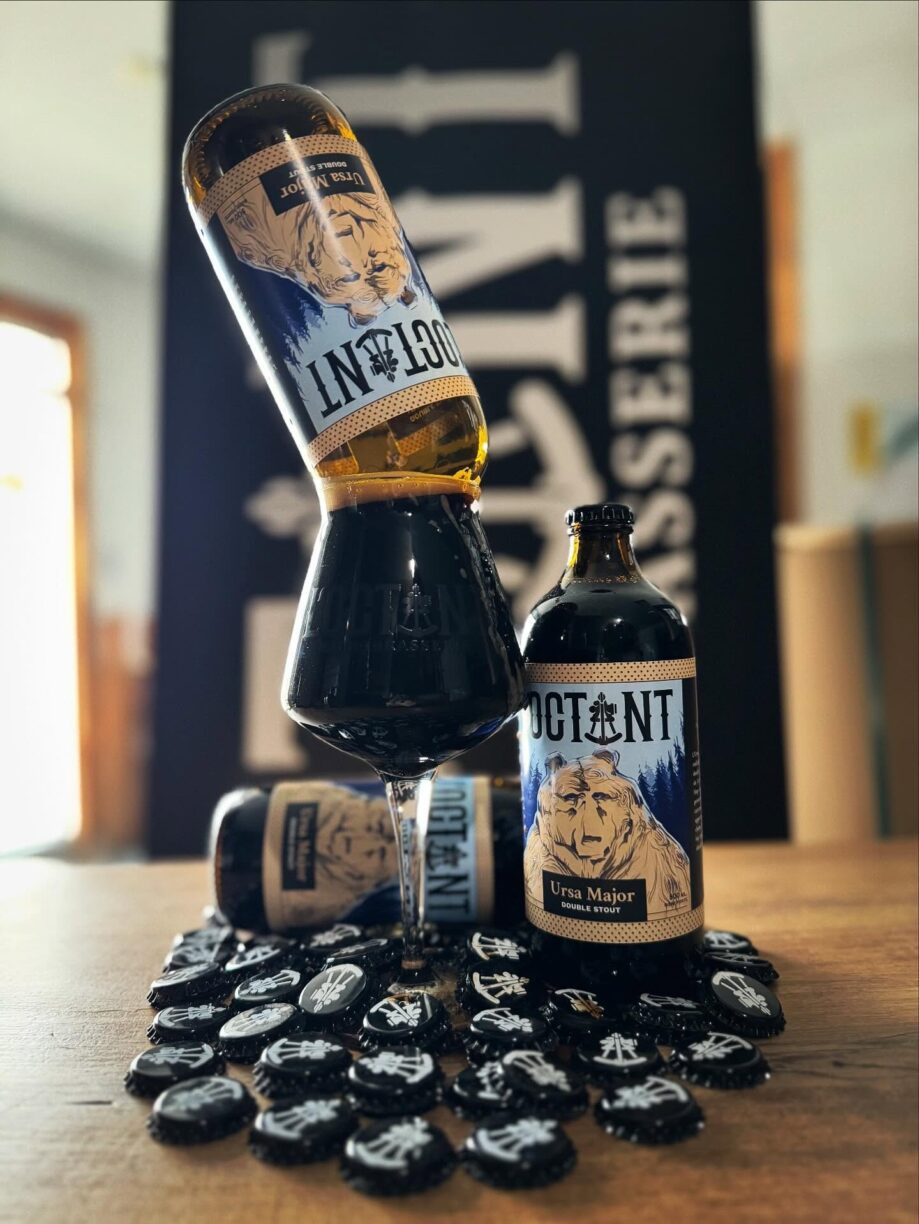
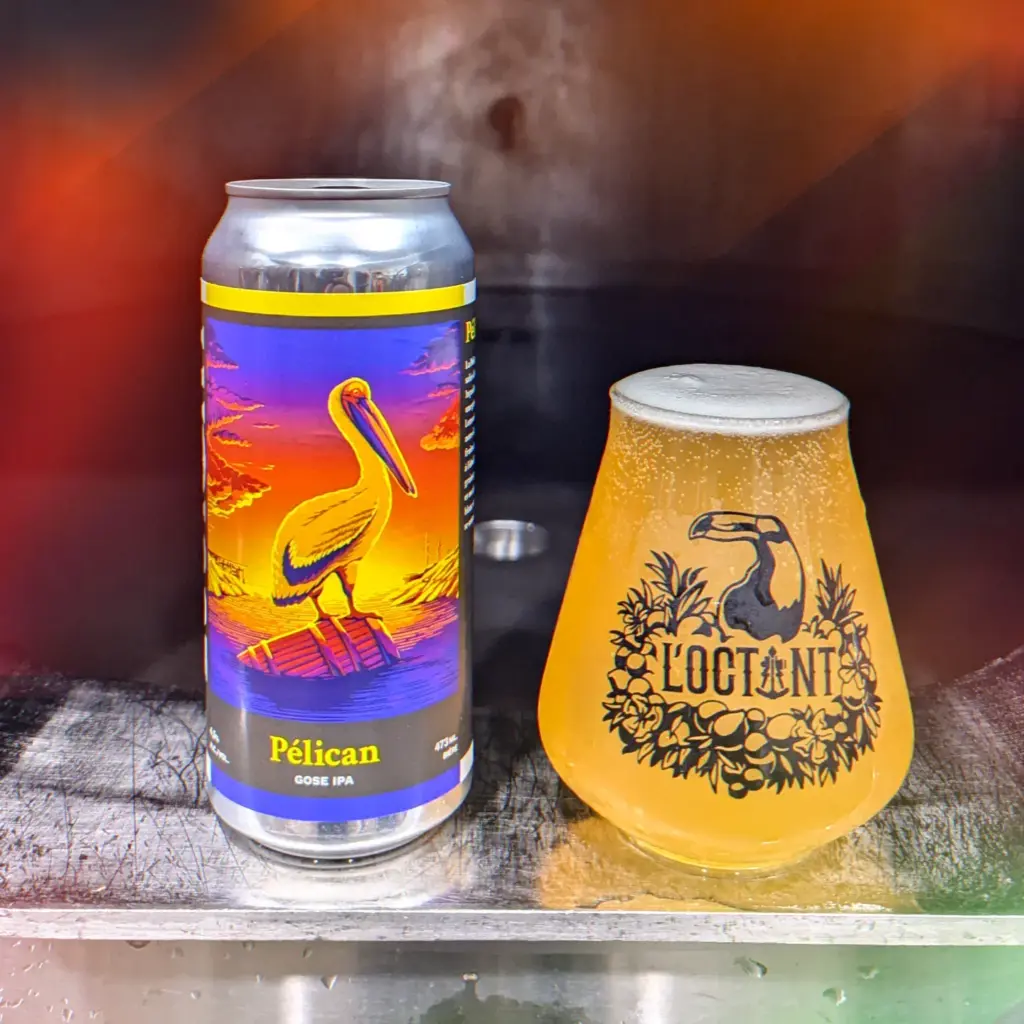
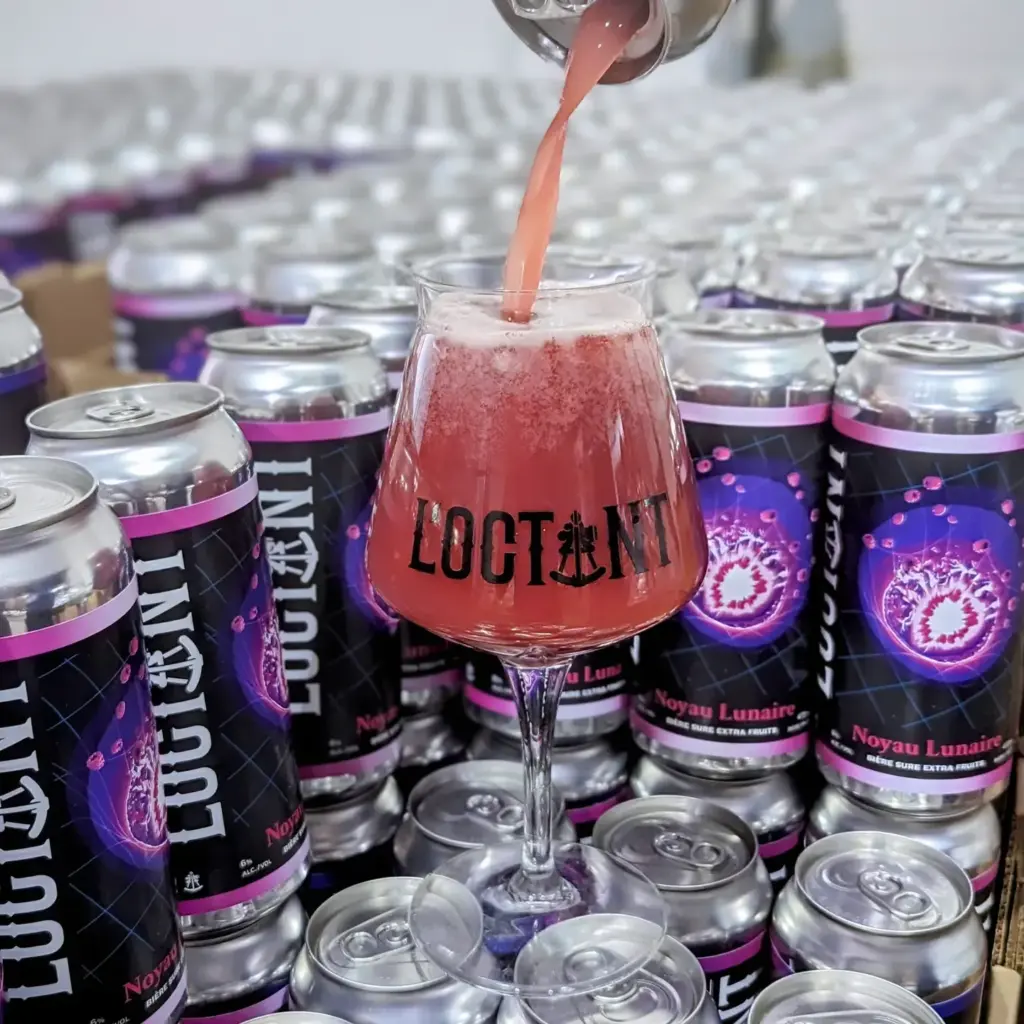
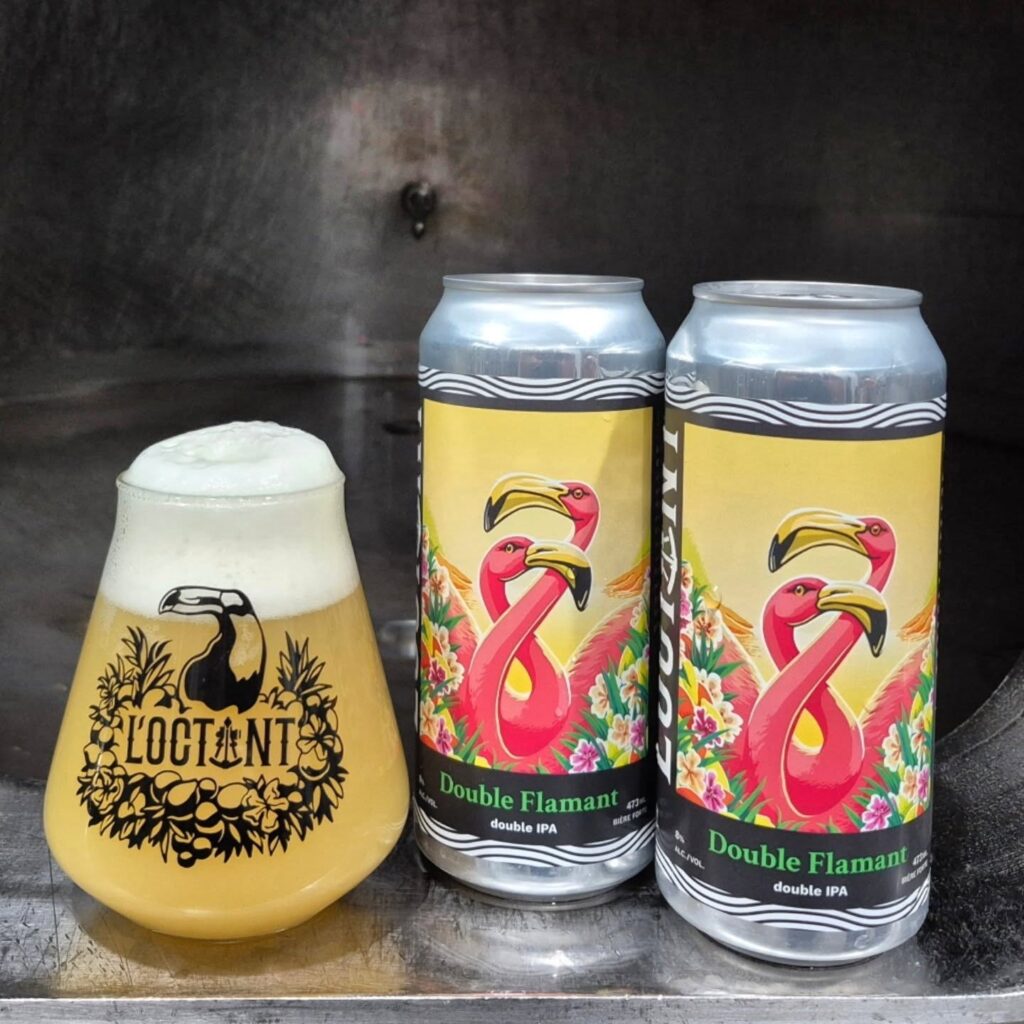
For Octant, design plays a central role. Its labels—colorful, distinctive, and consistent—serve as both branding and communication tools.
In crowded retail environments, where purchasing decisions are often made quickly, visual identity can determine whether a product is noticed at all.
This is not merely aesthetic. It is strategic.
In many cases, packaging functions as the primary interface between producer and consumer. It must convey:
- quality
- personality
- differentiation
Without it, even the best product risks invisibility.
Community as Infrastructure
Octant’s integration into the local ecosystem extends beyond retail.
Through partnerships with restaurants, bars, and cultural venues, the brewery embeds itself within the daily life of Rimouski. Its involvement in events such as the “Houblon sur rue” festival further reinforces this presence.
This approach transforms the brewery from a supplier into a community actor.
In economic terms, it creates a form of embedded demand. Customers are not simply purchasing a product; they are supporting a local institution.
This dynamic is difficult to replicate at scale. It depends on proximity, familiarity, and trust.
Industry Outlook: A Return to Local
The Québec craft beer market now counts more than 300 breweries. Growth in the number of producers has outpaced growth in demand.
The consequences are predictable:
- increased competition
- margin compression
- higher failure rates
In this environment, the expansion model that defined the previous decade becomes less viable.
Octant’s leadership anticipates a period of consolidation, with fewer openings and more closures.
Within this context, localism emerges not as a constraint, but as a strategy.
Breweries that focus on:
- strong local presence
- consistent product quality
- efficient operations
Are more likely to achieve long-term stability than those pursuing aggressive expansion.
A Model for the Next Phase
Octant Microbrasserie does not present itself as a blueprint. Yet its choices reflect a set of principles that are increasingly relevant:
- Concentration over dispersion
- Consistency over novelty
- Integration over visibility
- Resilience over growth
These principles are not unique to beer. They apply across industries facing similar structural pressures.
Rethinking Growth
For much of its recent history, the craft beer industry has equated success with expansion.
Octant challenges this assumption.
Its strategy suggests that, in a mature market, growth may be less about reaching new territories than about deepening existing ones.
This is a quieter form of ambition. It does not produce rapid headlines or exponential curves. But it may prove more durable.
As the industry enters its next phase, the question is no longer how far a brewery can go—but how well it can anchor itself where it already is.
About Beverage + Terroir
As the beverage and beer industries evolve, so too does the media that covers them. For several years, we’ve been reporting on the industry outside of Quebec in English through our Baron Mag and BBQ (Business of Beer of Quebec) podcasts.
With Beverage + Terroir, we’ve expanded our coverage to encompass beer, beverages, and food, providing a comprehensive look at the entire industry and its complex interconnections. The podcast explores not only trends, innovations, and market shifts, but also the people, places, and processes that define the craft, commercial, and artisanal sectors across Canada, the USA, and beyond.
Beverage + Terroir aims to give listeners a deeper understanding of how local ingredients, regional terroir, and industry dynamics shape the drinks we enjoy — from pint to plate.
_—————
Beer and Brewing — proudly presented by Innomalt, highlighting malt, brewing, and its role in craft and commercial brewing.
Terroir and Industry — brought to you by Pivohub, showcasing the people, places, and processes that define the food production and industry.
Beverage — presented by CanMan, covering trends, technologies, and innovations across the wider beverage landscape.
- Many other things to come.
Together, these partnerships allow Beverage + Terroir to deliver a 360-degree view of the industry, from ingredient to glass, and from local craft to national trends.
L’Octant – Microbrasserie | 24 B Rue des Ateliers, Rimouski | loctant-microbrasserie.com | facebook.com/LOctantMicrobrasserie | instagram.com/loctantmicrobrasserie |

