


In collaboration with innomalt
There are breweries that follow trends. Others that refine them. And then there is Brasserie Dunham — a project that, over the past fifteen years, has quietly built an entirely different kind of value proposition: part brewery, part cultural platform, part distribution strategy disguised as an art project.
In an industry now defined by consolidation, margin pressure, and distribution bottlenecks, Dunham stands out not only as a creative success story but also as a case study in long-term brand equity within craft alcohol.
Fifteen years in, the question is no longer what Dunham makes. It is what Dunham is — and why that matters in a market where differentiation has become increasingly difficult to sustain.
From craft experiment to structured identity
When Brasserie Dunham emerged in the early 2010s, Quebec’s craft beer sector was still forming its economic foundations. The ecosystem existed, but it lacked structure: fragmented distribution, inconsistent branding, limited scalability, and a consumer base still learning how to navigate styles beyond macro lagers.
“In the beginning, everything was still being invented,” recalls Sébastien Gagnon, President and General Manager of Brasserie Dunham. “Even internally, we were still figuring out how to operate like a company.”
At that stage, many breweries functioned more like independent creative labs than scalable food-and-beverage businesses. Cash flow was unpredictable. Supply chains were inconsistent. And brand identity was often secondary to production survival.
Dunham entered this environment not by optimizing efficiency, but by prioritizing differentiation — a decision that would define its trajectory for the next fifteen years.
The Vermont effect: early cross-border influence as competitive intelligence
One of Dunham’s earliest strategic advantages was its geographic proximity to Vermont — arguably the most influential craft beer region in North America during the 2000s and early 2010s.
At the time, breweries like The Alchemist and Hill Farmstead Brewery were redefining expectations for IPA quality, freshness, and distribution scarcity.
For Quebec brewers, Vermont was not just inspiration — it was market intelligence.
“We were seeing a level of execution that didn’t feel exaggerated,” says Gagnon. “It was precise, focused, and extremely intentional.”
But rather than replicate Vermont’s IPA-centric model, Dunham took a different approach. Instead of optimizing for volume or hype-driven releases, the brewery leaned into fermentation complexity, mixed culture, barrel aging, and stylistic hybridity.
From a business standpoint, this was a contrarian position.
At a time when IPA growth was accelerating globally, Dunham invested in products requiring longer aging cycles, more technical expertise, and higher production risk.
But it also created something more durable: brand separation.
Brand architecture as a competitive advantage
Perhaps the most distinctive aspect of Dunham’s business model is not its beer, but its branding system.
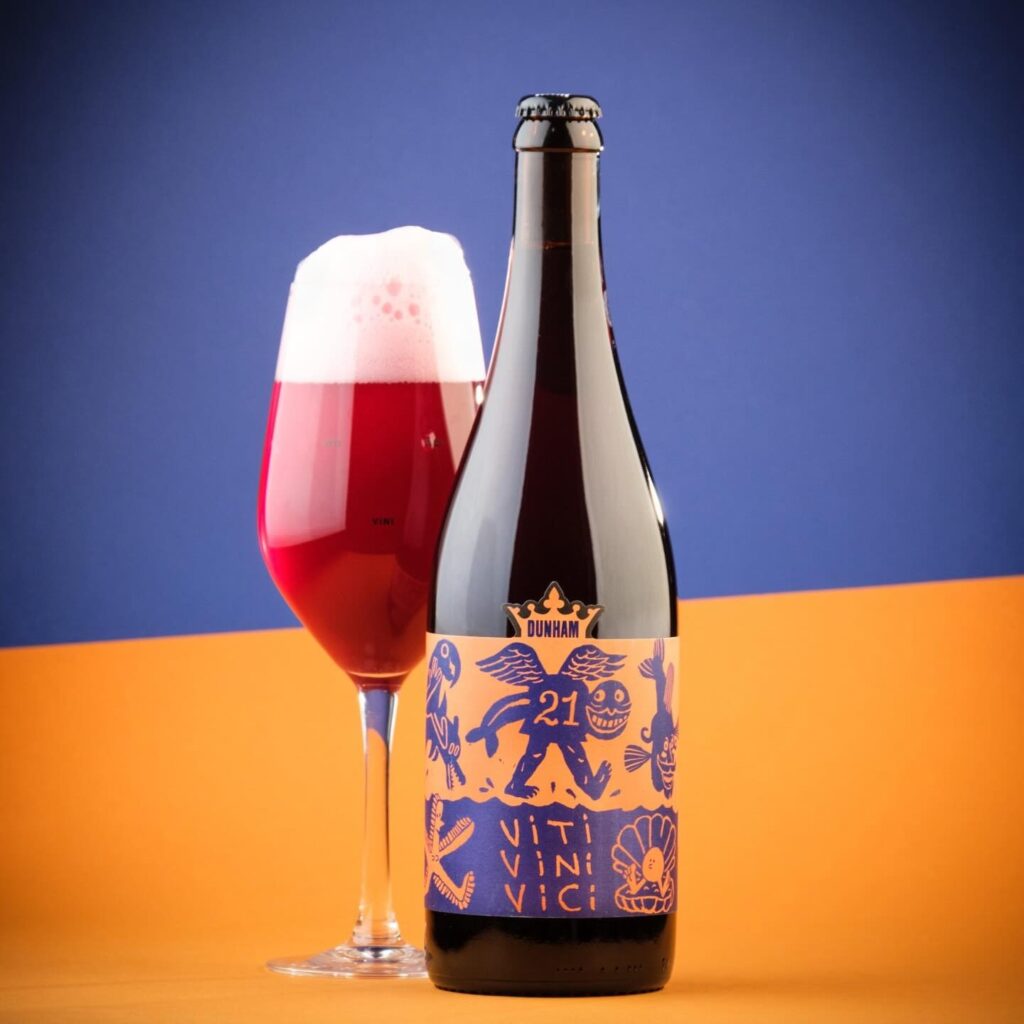
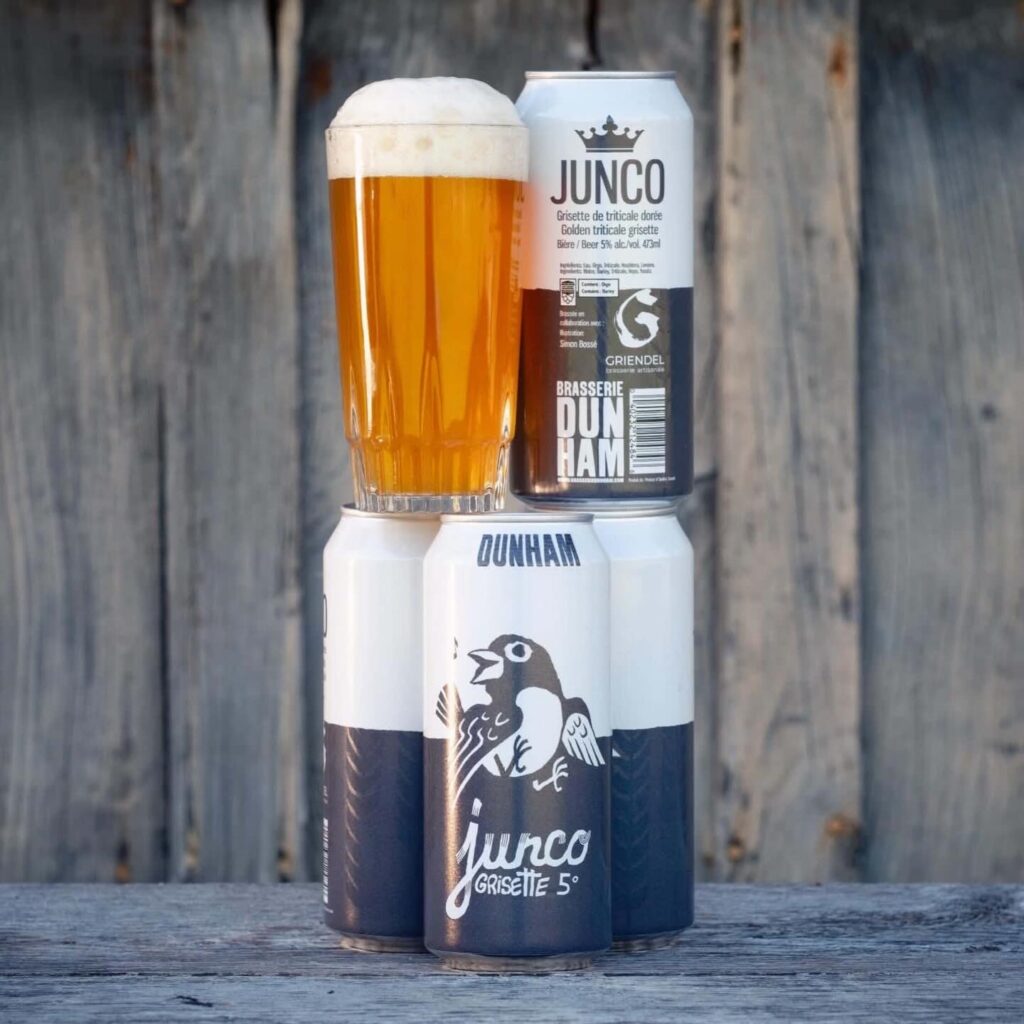
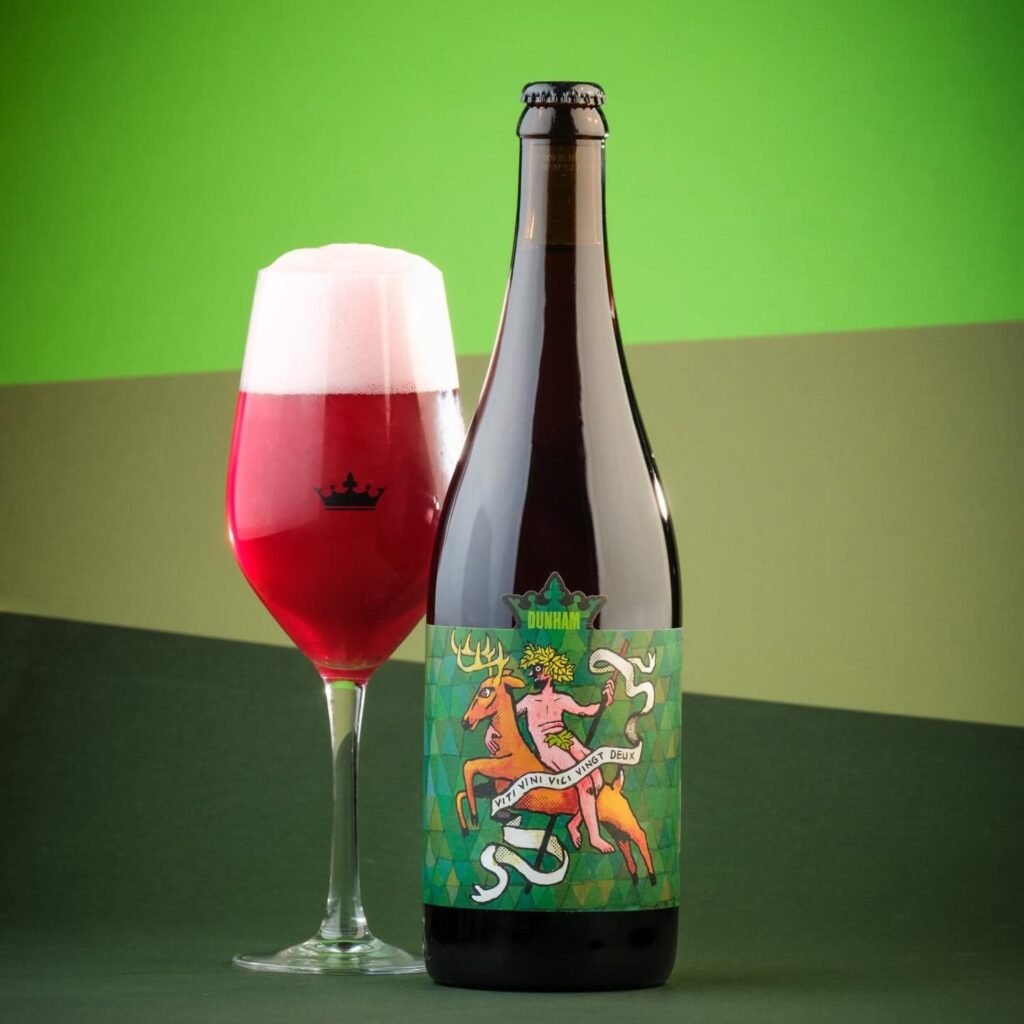
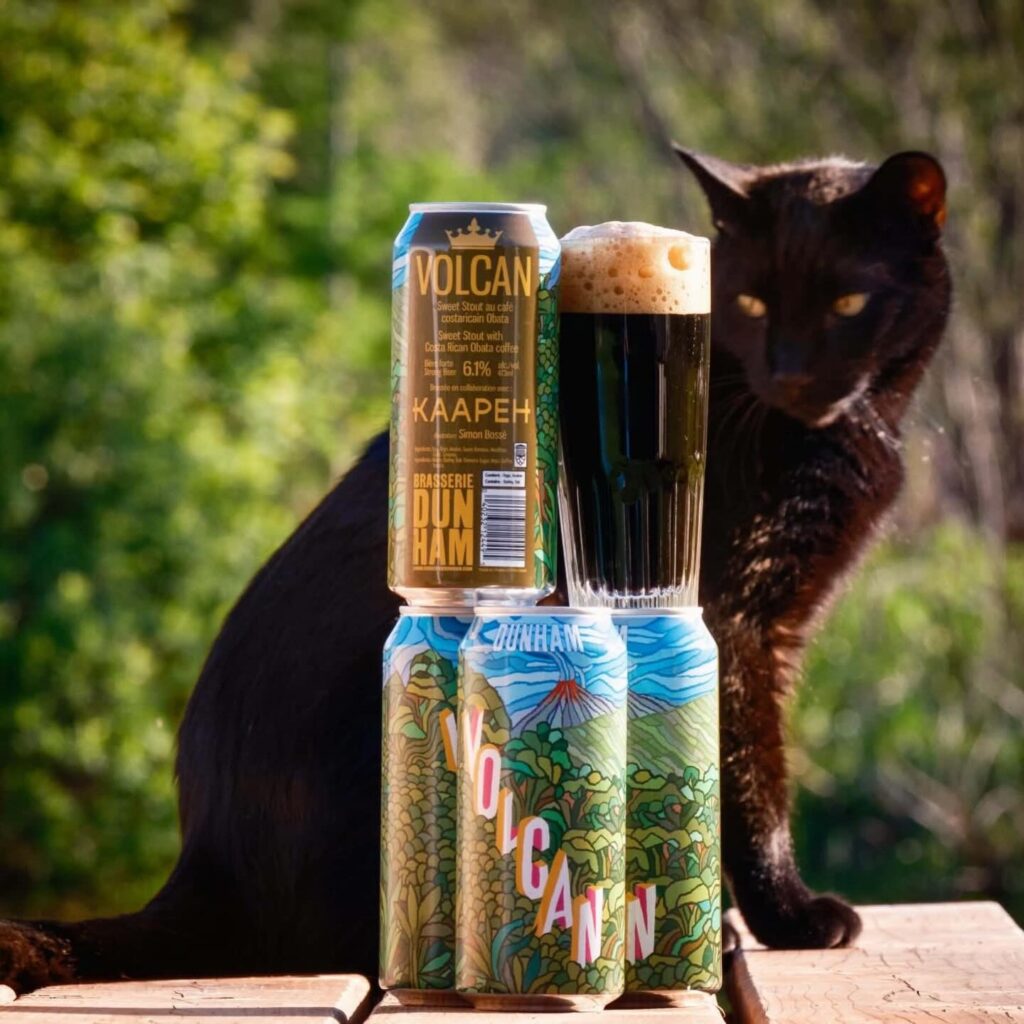
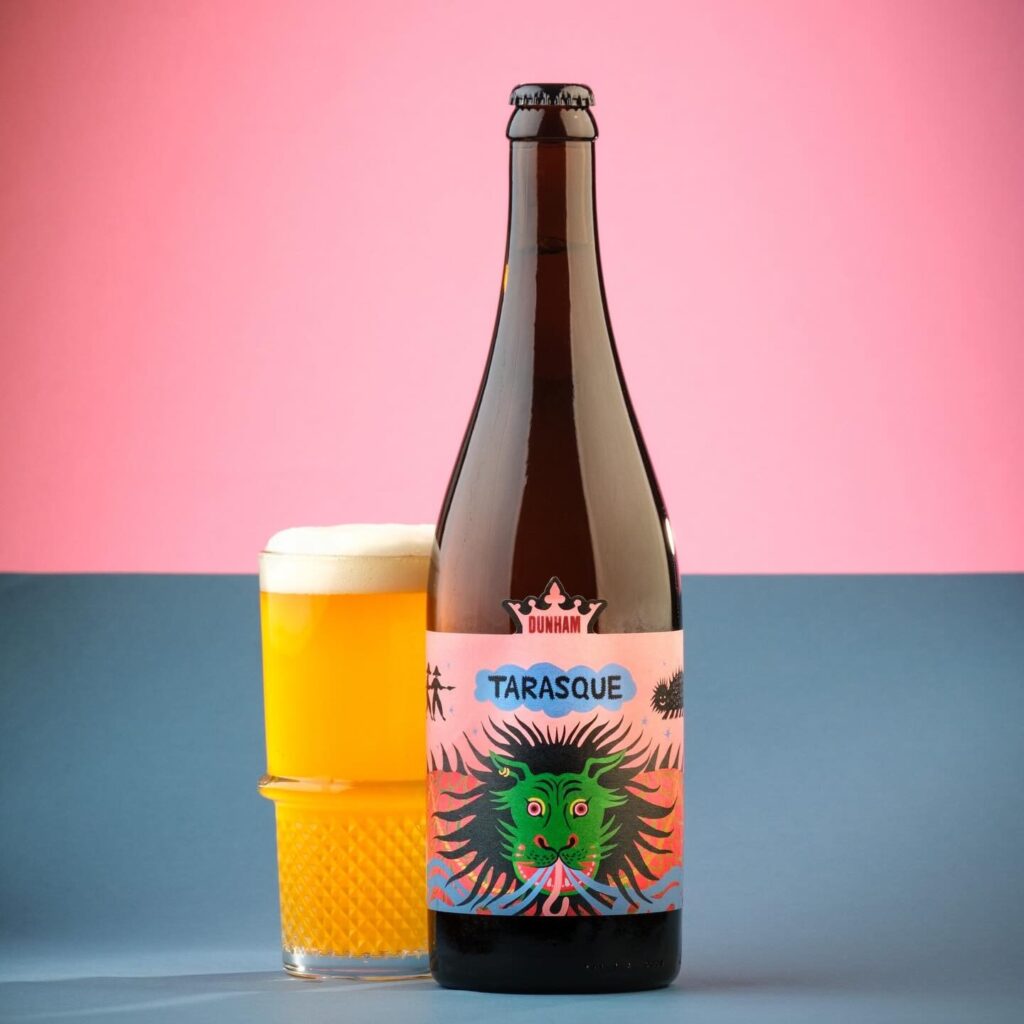
From the outset, Dunham rejected standardized visual identity. Instead, each release became a standalone creative object.
Art director Simon Bossé implemented a radical principle: no fixed corporate design system. Every label would function as an independent artwork, created with full artistic autonomy.
The result was not just aesthetic differentiation, but structural brand positioning.
Where most breweries rely on consistency to build recognition, Dunham built recognition through variability — a model closer to contemporary art than FMCG packaging.
From a B2B perspective, this is significant. In a saturated retail environment, shelf attention is a measurable asset. Dunham effectively converted visual identity into a marketing moat.
“We never refused a design,” says Gagnon. “Not once.”
This decision created a brand that cannot be easily replicated, franchised, or standardized — which, paradoxically, strengthened its premium positioning.
Craft beer as regional economic infrastructure
Over time, Dunham evolved beyond a brewery into a regional economic actor.
This is a critical shift that many craft breweries experience — but few fully leverage.
In small and mid-sized municipalities, breweries increasingly function as:
- tourism anchors
- cultural venues
- employment hubs
- retail destinations
- and informal community centers
Dunham became part of this transformation.
What began as an experimental production site gradually evolved into a destination business, contributing directly to local economic activity and regional identity.
“This is now the place people associate with the town,” Gagnon explains.
From a macro perspective, this reflects a broader trend in Quebec: craft breweries no longer operate solely as beverage producers. They function as hybrid hospitality and cultural infrastructure.
Market maturity and the end of the “easy growth” era
The Quebec craft beer industry has entered a new phase — one defined less by expansion and more by consolidation and survival strategy.
After years of rapid growth, the market is now experiencing:
- increased production costs
- labour shortages
- distribution saturation
- retail fragmentation
- and shifting consumer behaviour
According to Gagnon, this is not a crisis — but a normalization.
“Before, the fish jumped into the boat by itself,” he says. “Now you have to work for it.”
This shift has major implications for brewery strategy.
Where early-stage craft breweries relied heavily on novelty and rapid SKU expansion, mature market conditions now reward:
- operational discipline
- brand clarity
- experiential revenue
- and controlled distribution
Dunham’s response has been consistent with this shift: fewer expansions in production capacity, and greater investment in hospitality, on-site experience, and curated programming.
The taproom economy and experiential margin
One of the most important strategic pivots in modern craft brewing is the increasing importance of direct-to-consumer revenue.
Dunham has embraced this model early.
Instead of focusing primarily on scaling production capacity, the brewery invested in:
- beer garden infrastructure
- events programming
- collaborations
- on-site hospitality
- and destination-driven traffic
From a business standpoint, this is a margin protection strategy.
Retail distribution in craft beer is increasingly competitive and discount-sensitive. Taproom revenue, by contrast, offers:
- higher margins
- brand-controlled experience
- reduced intermediary costs
- and stronger customer retention
This is where Dunham’s model becomes particularly relevant for other breweries: growth is no longer purely production-based — it is experience-based.

International positioning: Quebec as a credible craft region
Over the past decade, Quebec has transitioned from a regional craft beer market to a recognized international brewing ecosystem.
Dunham played a role in that repositioning.
Through collaborations, festival participation, and export visibility, the brewery contributed to a perception shift: Quebec is no longer an emerging market — it is a reference point.
Alongside breweries such as Dieu du Ciel! and Le Trou du Diable, Dunham helped establish a recognizable identity for Quebec craft beer abroad.
This matters economically because international recognition directly impacts:
- collaboration opportunities
- tourism flow
- brand valuation
- and distribution credibility
In other words, reputation becomes infrastructure.
The next phase: innovation without identity dilution
After fifteen years, the central strategic question becomes the sustainability of relevance.
For Gagnon, the answer is not reinvention, but controlled curiosity.
“Stay curious. If you stop moving, you become stagnant.”
This philosophy is reflected in Dunham’s current approach: experimentation with new lager styles, technical refinement, and continued exploration of fermentation methods — but without abandoning core identity.
This is a critical tension in craft brewing today.
Too much innovation leads to brand dilution. Too little leads to stagnation.
Dunham’s position sits in the controlled middle: evolution without identity collapse.
Industry implication: what Dunham represents in 2026
From a B2B industry perspective, Dunham is less a brewery and more a model for:
- long-term brand equity creation
- artisanal premium positioning
- cultural branding as differentiation
- and experiential revenue integration
It demonstrates that in a saturated craft beer market, success is not defined by scale alone, but by:
- narrative coherence
- creative consistency
- and ecosystem integration
Many newer breweries already outperform early Dunham technically — but few match its brand depth.
As Gagnon notes:
“The new generation starts with tools we didn’t have. They are already better on day one.”
That may be Dunham’s most important legacy: not dominance, but contribution to a system strong enough to outperform its founders.
Fifteen years later: a business that still behaves like a project
In an industry increasingly shaped by consolidation, private equity interest, and distribution pressure, Brasserie Dunham remains structurally unusual.
It continues to operate as a hybrid:
- part manufacturing business
- part cultural institution
- part experiential venue
- part creative platform
This model may not scale easily — but it sustains resilience.
And in today’s craft beverage economy, resilience is becoming more valuable than expansion.
Fifteen years in, Dunham has not only survived the evolution of Quebec’s craft beer industry.
It has helped define what that evolution looks like.
And perhaps more importantly, it has proven that in a mature market, identity is no longer just branding.
It is strategy.
The 15th anniversary series of Brasserie Dunham is a collaboration between Baron Mag and Innomalt.
Innomalt is your brewing partner in Quebec, Canada, and the USA, providing locally sourced malt to brewers who value both quality and craftsmanship. Designed to support the local industry, Innomalt works alongside breweries to strengthen recipe development, consistency, and long-term growth.
Contact Innomalt for your beer projects and to build strong products rooted in Quebec’s terroir.
- Dive into the world of malt. Subscribe to the monthly newsletter at innomalt.ca to access expert insights, exclusive offers, and the latest industry trends.
- Exclusive monthly malting facility tours are available for microbrewers.
- Discover behind-the-scenes insights into their collaborations and clients through a series of in-depth interviews with partners, in collaboration with Baron Mag – Les Affaires Brassicoles.
You can Listen to the Podcast in French with Sébastien Gagnon

