


Toronto’s food and beverage scene continues to expand with the arrival of a new Korean restaurant concept from Gyopo Brewery, adding another layer to a city already defined by rapid culinary evolution and dense competition.
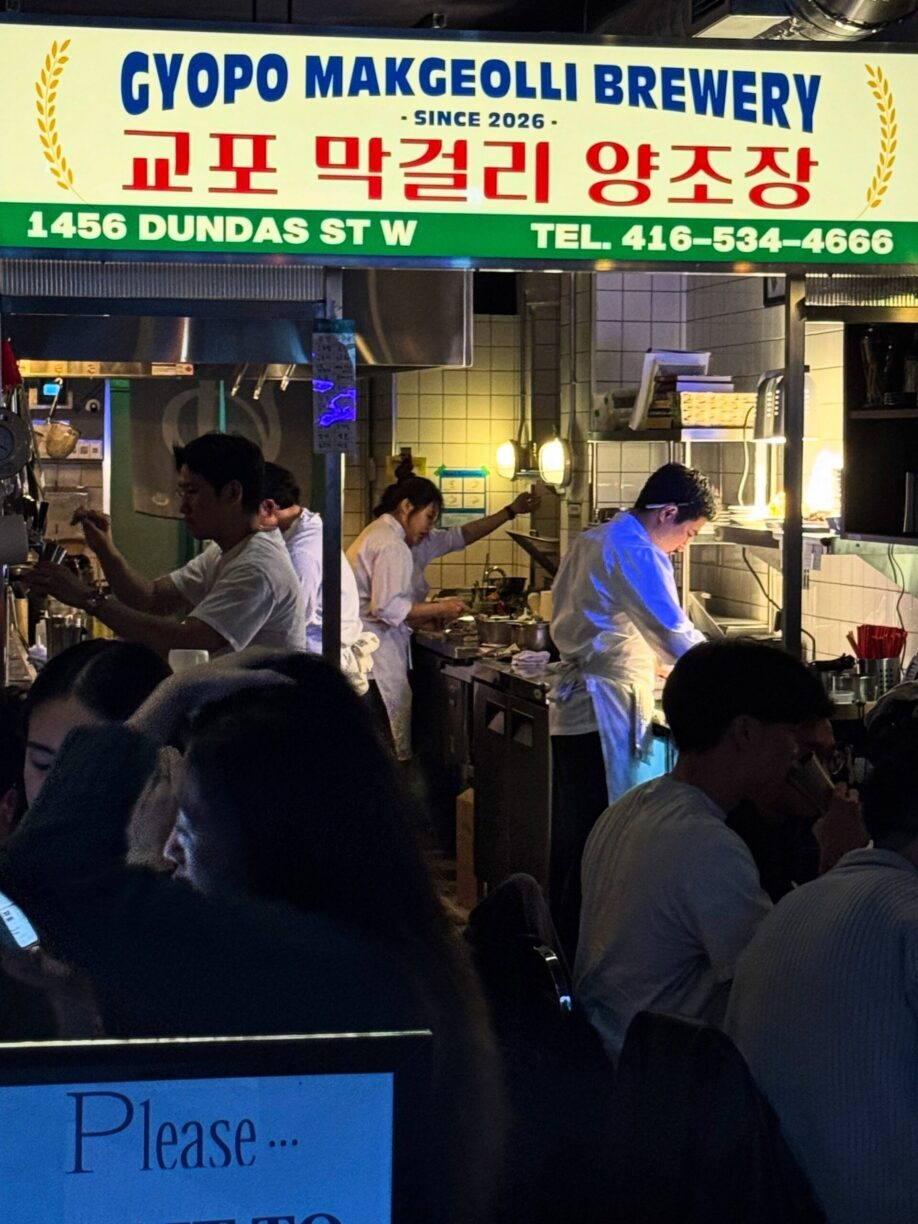
The new venue is built around a distinctly Korean approach to dining: anju, a style of cuisine designed specifically to accompany alcohol. Rather than treating food and drink as separate experiences, the concept integrates them into a single social format where shared plates and house beverages extend the rhythm of the evening.
The menu features a broad range of traditional Korean dishes, from slow-cooked preparations and grilled meats to spicy street-food staples. The intention is less about formal dining and more about communal consumption — dishes designed to be shared, reordered, and paired continuously with drinks such as soju and other house offerings.
This “eat + drink” model has become increasingly popular in Toronto, particularly in nightlife-heavy districts where restaurants are expected to function as social spaces as much as dining rooms. The result is a hybrid format that sits somewhere between restaurant, bar, and cultural gathering space.
Located at 1456 Dundas St W in Toronto, the new opening reflects a broader trend in the city’s Korean food scene. Over the past few years, Korean restaurants have moved beyond traditional BBQ formats to embrace more experiential concepts — longer service hours, louder social environments, and menus explicitly built around drinking culture.
The expansion also highlights how competitive Toronto’s restaurant landscape has become in neighbourhoods such as Ossington, North York, and along major west-end corridors. New entrants are increasingly forced to differentiate not only through cuisine, but through atmosphere and identity.
For Gyopo Brewery, the move signals a continued blending of hospitality and beverage culture, where food service is designed to reinforce drinking occasions rather than sit beside them as a separate offering.
In a market where consumers are increasingly drawn to experiences over simple transactions, the success of this concept will likely depend on its ability to sustain late-night energy, social engagement, and a consistent pairing between kitchen output and beverage program.
Toronto’s Korean dining wave shows no signs of slowing down — and this latest opening reinforces the city’s position as one of North America’s most dynamic testing grounds for hybrid food-and-drink concepts.

