


In Quebec’s craft beer landscape, some microbreweries chase rapid expansion. Others focus instead on territory, proximity, and a form of regional autonomy. Barbe Broue clearly belongs to the second category: a young brewery in the Témiscamingue region continuing to build its project far from major urban centres.
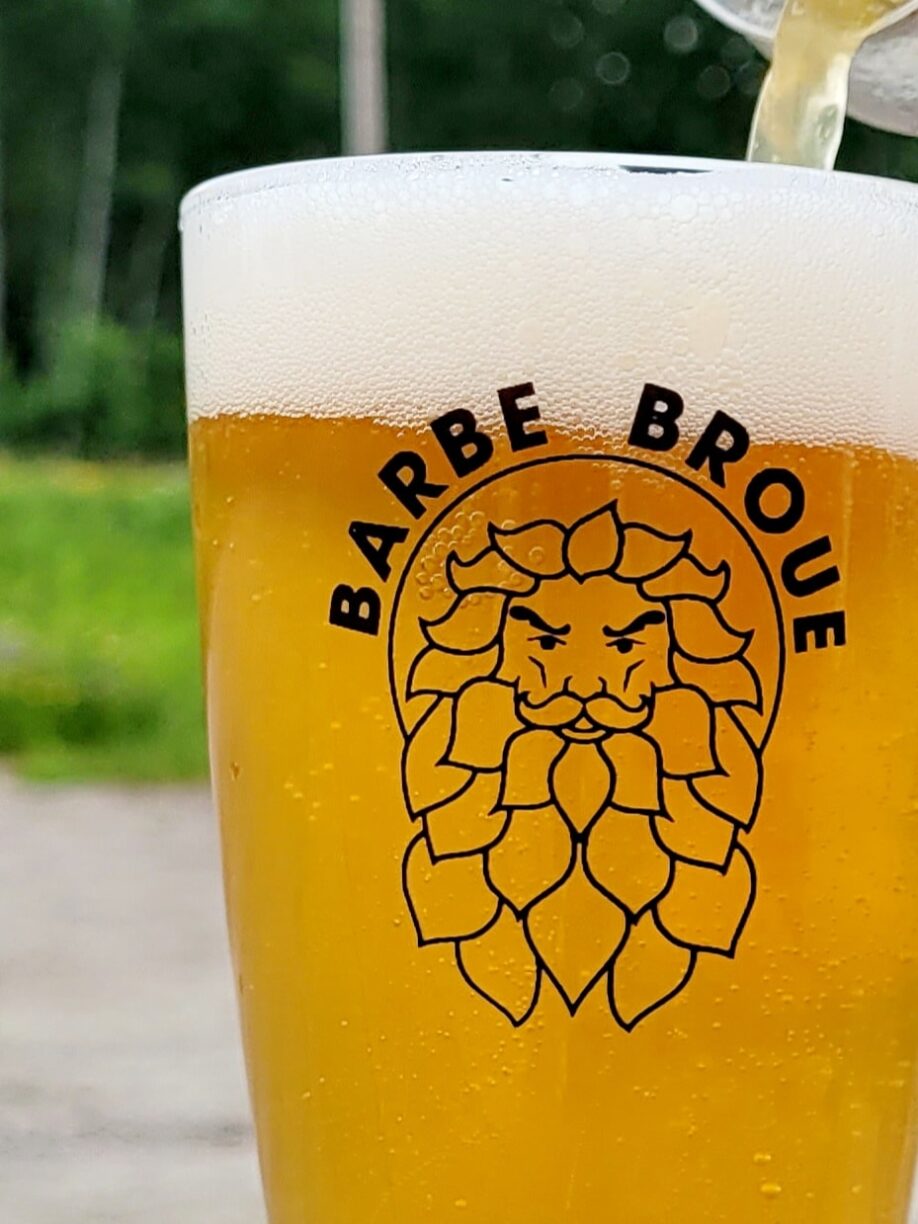
Located in an area where distance complicates both logistics and recruitment, the brewery has nevertheless turned this constraint into a defining part of its identity. Where urban breweries compete for the same saturated markets, Barbe Broue leans into a deeply local approach — shaping both its community relationships and its brewing philosophy around place.
The regional context directly shapes the business model. In Témiscamingue, producing beer means dealing with higher transport costs, more complex supplier access, and a geographically dispersed customer base. Yet that same distance also creates a different kind of loyalty. A microbrewery quickly becomes more than a production site — it becomes a gathering point, a cultural hub, and a social anchor.
This dynamic is particularly visible in Quebec’s remote regions, where food and beverage businesses often carry a broader economic and cultural role than simple commercial activity. They contribute to local vitality, attract visitors, and reinforce a distinct regional identity.
For Barbe Broue, the challenge now is finding balance between growth and territorial anchoring. The temptation to scale into larger markets is ever-present in the brewing industry, especially in a context where margins remain tight and competition is intense in urban centres. But many regional breweries are also discovering that smaller scale can become an advantage when paired with strong local integration.
The Quebec craft beer model is itself evolving. After a decade dominated by IPA expansion, frequent releases, and marketing driven heavily by social media, many consumers are now looking for something more stable, more human, and more rooted.
In that context, regions like Témiscamingue offer a paradoxical advantage: they force breweries to build a clear identity rather than constantly chasing trends.
For Barbe Broue, the challenge is therefore not only to produce quality beer. It is also to demonstrate that a microbrewery can function as a regional cultural infrastructure — one capable of generating economic value while strengthening a sense of local belonging.
And in a Quebec brewing industry entering a more mature and complex phase, that ability to build durable ties to territory may ultimately matter more than volume growth alone.
19 rue Ste-Anne, Ville-Marie | barbebroue.ca

