


The Second Room
There is a particular efficiency to industry gatherings. Name badge clipped, schedule in hand, conversations calibrated somewhere between optimism and caution. In the world of beer, these meetings remain essential—supply chains discussed, margins debated, trends forecasted with varying degrees of conviction.
And yet, something is missing.
Not inside the room, but outside of it.
The industry has become remarkably good at talking to itself. Less so at designing moments where it can be understood by those it ultimately depends on. The consumer, after all, is not absent—just rarely invited into the conversation in a meaningful way.
This is where the idea of a second room becomes interesting.
Not an extension of the trade show, nor a diluted version of it, but a parallel space: public-facing, slower, and built not around transactions but around understanding. A two- or three-day program where drinkers can do more than sample—they can engage.
Because what’s required now is not another festival. The market has no shortage of those, and beer festivals have their own structural problems. What it lacks is context.
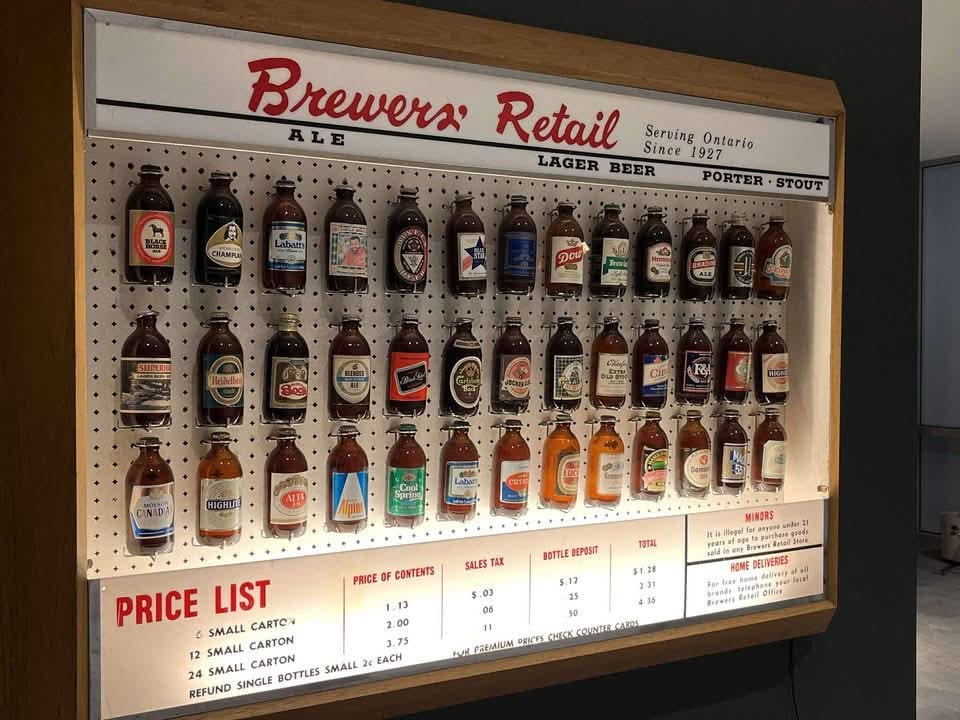
For years, beer has relied on proximity to build loyalty. Taprooms, brewpubs, neighbourhood bars—places where the distance between producer and drinker could be measured in steps rather than supply chains. As the industry expanded, that proximity became harder to maintain. Distribution widened, portfolios grew, and somewhere along the way, familiarity was replaced by choice.
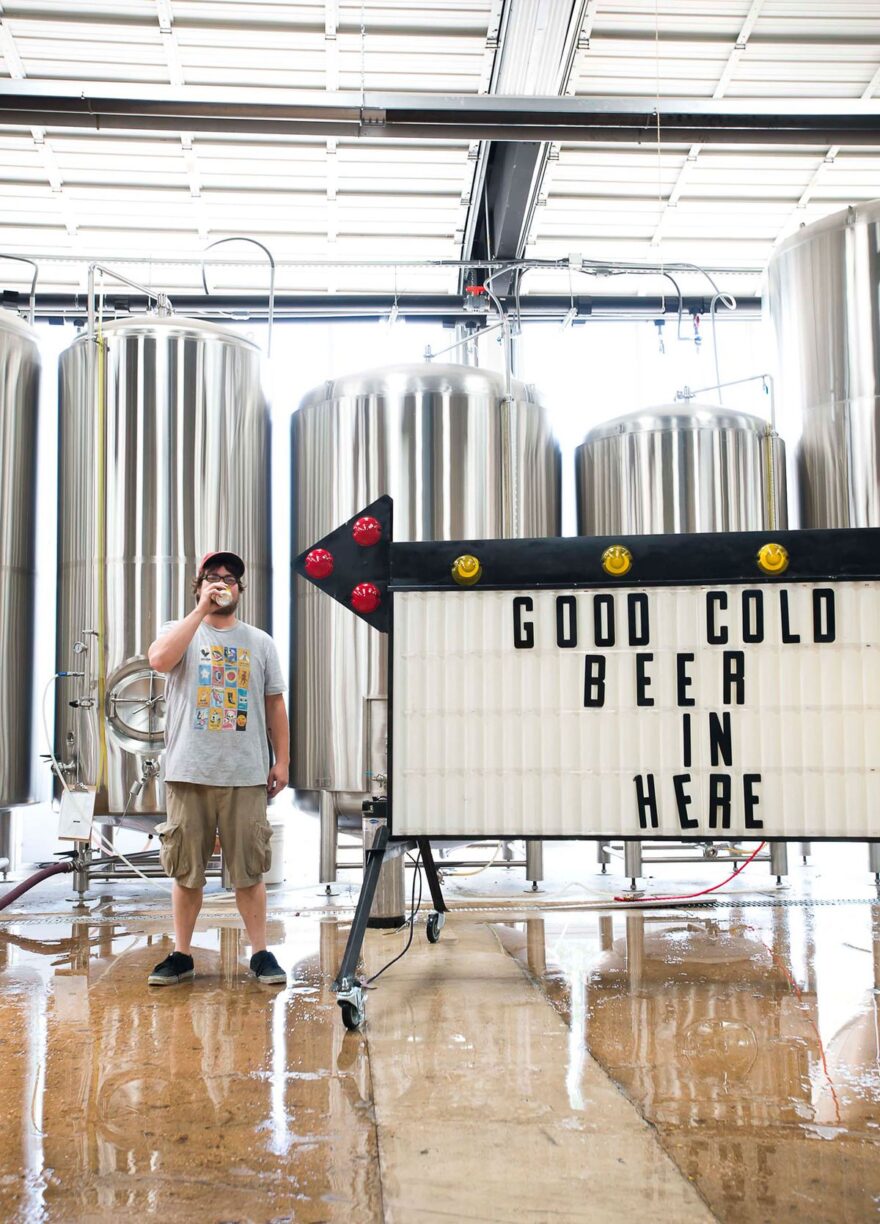
Choice, it turns out, is not always an advantage.
Today’s consumer is navigating a crowded field: spirits in endless variations, canned cocktails engineered for convenience, non-alcoholic options that no longer feel like compromises. Beer still holds its ground, but it no longer commands attention by default. It must compete for it.
And competition, increasingly, is cultural.
This is where a public-facing forum begins to make sense. Not as a marketing exercise, but as a way of rebuilding literacy about beer. A place where a curious drinker might spend the afternoon understanding why a lager tastes the way it does, or what it means for a brewery to source locally in a globalised supply chain. Where conversations extend beyond flavour notes to include economics, agriculture, and design.
Importantly, this is not about simplifying the message. Consumers today are more than capable of engaging with complexity—provided it is presented with clarity and respect. The appetite is there. What’s been missing is the invitation.
The format itself need not be complicated. A series of small, well-curated sessions during trade shows. Brewers speaking not as marketers but as practitioners. Panels that acknowledge competition from adjacent categories rather than ignoring it. Evenings that return, sensibly, to the pleasure of drinking—but with a deeper understanding of what’s in the glass.
Crucially, this second room must remain distinct from the first. The trade show continues its work—focused, efficient, closed where necessary. The public forum operates differently: open, narrative-driven, and willing to wander into topics that do not always fit neatly into a balance sheet.
Because when the two audiences meet—informally, perhaps over a drink at the end of the day—the quality of the conversation shifts. The brewer is no longer presenting to a buyer, but to someone who has spent the afternoon learning. The exchange becomes less transactional, more reflective. And, one suspects, more useful.
There is, inevitably, a commercial argument to be made. Tickets can be sold, sponsors secured, and visibility increased. But to focus on this is to miss the larger opportunity. What is being built here is not an event, but an ecosystem—one that acknowledges that the future of beer will depend as much on understanding as it does on production.
Other industries have already grasped this. Design fairs open themselves to the public. Fashion weeks extend beyond buyers to audiences. Even food, once the domain of chefs and critics, has become a participatory culture. The best example is Milan Design Week. Beer, for all its accessibility, has been slower to follow.
It can afford to be no longer.
The instinct in uncertain times is to consolidate—to focus inward, strengthen existing networks, speak more clearly to those already listening. But growth rarely comes from repetition. It comes from expansion. From finding new ways to be relevant in a landscape that is evolving, whether the industry chooses to acknowledge it or not.
The second room is, at its core, an act of confidence. A belief that what the industry does is not only worth discussing among itself, but worth sharing more widely.
Because the real risk facing beer today is not that people will stop drinking it altogether.
It is that they will stop thinking about it.
An Open Invitation
If this second room is to work, it must remain just that: open. Not confined by the usual codes of trade shows or the closed logic of industry-only events. This is not a festival in the traditional sense, nor a business enclave. It is an invitation.
An invitation to consumers, certainly—but also to the broader ecosystem: restaurateurs, producers, suppliers, associations, and adjacent industries. Beer does not evolve in isolation, and neither should the conversations around it.
Education, here, is not an accessory. It is the foundation. The opportunity is to create a space where clients become informed participants, where industries intersect, and where understanding replaces assumption.
At Baron Mag, we have been covering beer trade shows across Quebec, Canada, and the United States for several years—speaking with suppliers, brewers, and industry stakeholders.
We are seeing clear patterns emerge:
- Rising representation and participation costs
- Sponsorships are becoming increasingly difficult to secure
- Higher expectations from both exhibitors and attendees
- A lack of meaningful innovation in formats
- Reduced travel and participation budgets
- Increased pressure on event ROI
- Fatigue with traditional formats (booths, panels, standard networking)
- Difficulty attracting new audiences and fresh industry profiles
- Growing competition between events for the same participants and partners
- A disconnect between industry messaging and real consumer expectations
- Continued reliance on outdated funding models that are becoming less viable
- A fragmented ecosystem, limiting meaningful collaboration between trade shows
The question is no longer how to do more—but how to do things differently.
As Baron Mag prepares to cover AMBQ 2026, the Ontario Craft Brewers Conference Marketplace, the Canada Beer Cup / Alberta Craft Brewing Convention, the Vermont Brewers Association conference, and others, we will be paying close attention to how trade shows and industry events evolve.
And you?
We want to hear your perspective.
What should these events become?
What is currently missing from trade shows and industry conferences?
All responses will be published anonymously.

