


Costco will open four new warehouses in Canada this November. Behind the expansion lies a bigger question for food and beverage companies: who will gain access to volume, shelf space and consumers as Canadian grocery distribution becomes increasingly competitive?
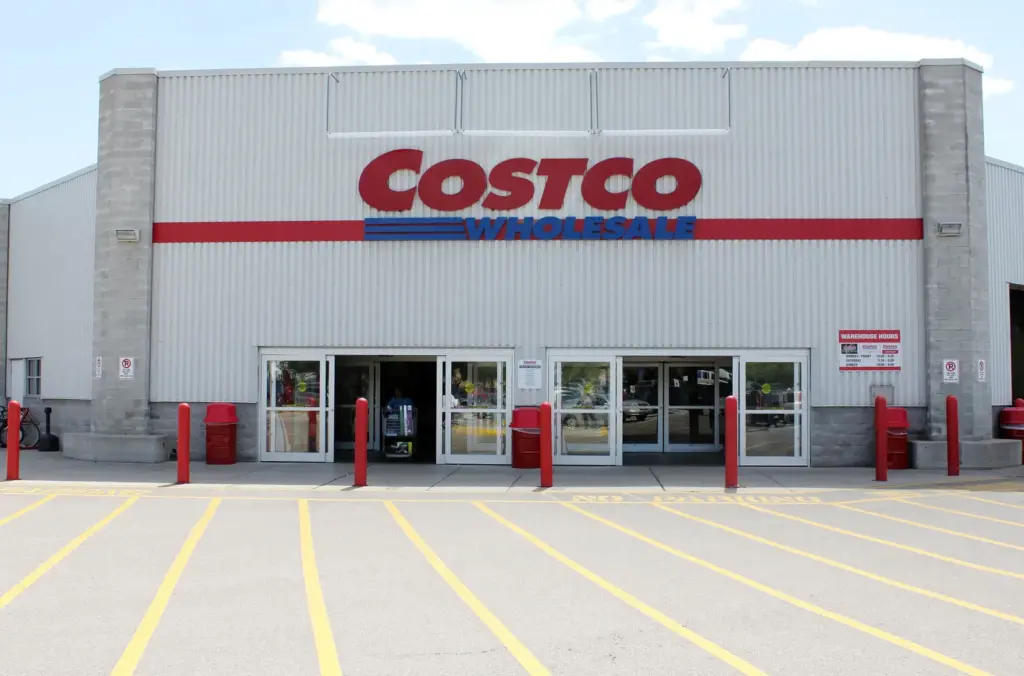
Costco is still moving forward.
In November, the warehouse club will open four new Canadian locations: Northeast Edmonton and Lloydminster in Alberta, plus East Windsor and Wasaga Beach in Ontario. More Ontario locations are already planned for 2027, including Belleville, Thunder Bay and Oakville.
This is more than a real-estate story.
For the food and beverage industry, every new Costco warehouse potentially represents another high-volume distribution point. But it also highlights a tougher reality: getting into Costco can transform a brand’s sales while imposing operational demands that not every company can absorb.
The volume model
Costco operates differently from a traditional supermarket.
The retailer relies on a relatively controlled assortment, large volumes and high product turnover. For a supplier, securing space in that system can therefore be extremely attractive.
But volume is never free.
A brand that wins a major Costco listing needs to produce more, maintain consistent quality, deliver on schedule and meet the logistical requirements of a national network.
That is particularly important for food and beverage companies trying to move from regional distribution to national scale.
The question is no longer simply: “Does Costco want my product?”
It becomes: “Is my company built to supply Costco?”
Geography matters
The current expansion also says something about Costco’s Canadian strategy.
Alberta and Ontario are at the centre of this latest wave, with Northeast Edmonton, Lloydminster, East Windsor and Wasaga Beach scheduled for November.
For local suppliers, that can create meaningful opportunities.
A producer that was previously too far from an existing warehouse may suddenly have a much more accessible distribution point. For fresh food, beverages, refrigerated products and other categories where freight represents a significant portion of the cost base, proximity can fundamentally change the economics.
But Canada’s geography remains a challenge.
Shipping a product to Edmonton, Toronto, Montreal or Halifax does not carry the same cost. For smaller companies, distribution can quickly become the real constraint on growth.
That means a new warehouse does more than create potential demand. It can change the economics of an entire territory.
A more competitive retail market
Costco is also expanding in an environment where other food retailers are accelerating their own growth.
Empire, the parent company of Sobeys, Safeway and FreshCo, now expects to open more than 25 new stores in fiscal 2027, up from its previous forecast of 20. The company also says it is gaining share in both traditional and discount formats.
The message for suppliers is clear: the fight for the Canadian consumer is no longer taking place only between traditional grocery chains.
Warehouse clubs, discount stores, conventional supermarkets, e-commerce and emerging retail formats are competing for the same food dollar.
For brands, distribution strategy is therefore becoming as important as the product itself.
Costco as an accelerator — but not for everyone
The risk for food and beverage companies is confusing volume with profitability.
A large order can look extremely attractive. But it can also require additional production capacity, working capital, inventory, packaging and logistics.
A producer can sell substantially more while earning proportionally less if it has not properly calculated its cost base.
That is particularly relevant for SMEs and emerging brands.
Packaging also becomes strategic. A product sold through a warehouse club is not necessarily presented in the same way as a product sold individually through a supermarket. Pack size, units per case, pallet configuration, shelf life and delivery frequency need to be considered from the beginning.
The power of distribution
Costco already operates more than 100 warehouses in Canada and says its volume per location is high. During a recent earnings call, President and COO Ron Vachris said the company had 114 buildings in Canada and continued to look for opportunities to grow.
That density changes the balance of power in the industry.
For Canadian brands, Costco can be an extraordinary growth accelerator. For suppliers capable of keeping up, access to a national network can dramatically shorten the path from regional brand to broader market visibility.
But it requires a business capable of supporting that growth.
That may be the most important lesson behind these four new openings.
The next battle in Canadian food will not be fought only over products. It will be fought over the ability to produce, package, finance and distribute at scale.
And Costco has just added four more doors to that battle.

