


Powered by Innomalt | Crafting Exceptional Malts
For more than a decade, the North American craft beer industry operated under a relatively stable assumption: growth was both necessary and inevitable. Expansion into new territories, increased production capacity, and a constant stream of new releases defined success. Breweries that failed to scale risked being left behind.
But in 2026, that assumption no longer holds.
Across Québec—and the world—the industry is entering a new phase defined not by acceleration, but by recalibration. Growth has slowed. Margins have tightened. Distribution has become more complex and less predictable. And perhaps most importantly, consumer behavior has shifted in ways that challenge the very foundation of the previous model.
Within this evolving landscape, a new generation of breweries is emerging—not with the ambition to dominate markets, but with the intent to embed themselves deeply within them.
Brasserie L’Inconnue, located in Montréal’s Mile-End, is one such example.
It is not the largest, nor the most technologically advanced, nor the most visible brewery in the province. But its significance lies elsewhere: in how it redefines the relationship between production, place, and audience.

The End of the Expansion Era
To understand the relevance of L’Inconnue, one must first examine the trajectory of the craft beer industry over the past fifteen years.
The early 2010s marked a period of explosive growth. New breweries opened at an unprecedented rate, fueled by rising consumer interest, relatively accessible financing, and a regulatory environment that increasingly favored small producers.
In Québec, this expansion was particularly pronounced. The province developed one of the most dynamic craft beer ecosystems in North America, characterized by stylistic diversity, strong regional identities, and a deeply engaged consumer base.
However, growth brought with it structural challenges.
As the number of breweries increased, so did competition—not only for consumers, but for distribution channels. Shelf space in depanneurs and grocery stores became saturated. Bars and restaurants, once eager to showcase local products, began to streamline their offerings.
At the same time, operating costs rose significantly. Ingredients, energy, labor, and logistics all became more expensive. Inflation compounded these pressures, forcing breweries to raise prices in a market that was becoming increasingly price-sensitive.
The result is a paradox: more breweries than ever, but fewer viable paths to sustainable growth.

Distribution as a Structural Constraint
For much of the industry’s history, distribution was viewed as the primary lever for scaling. Getting beer into more points of sale meant increasing visibility, building brand recognition, and ultimately driving volume.
But distribution is not neutral. It is a system with inherent costs and constraints.
In Québec, breweries navigating retail channels must contend with:
- listing fees and negotiations with retailers
- transportation and logistics infrastructure
- inventory management across multiple locations
- product freshness concerns
- competitive positioning against both craft and macro brands
For larger breweries, these challenges can be mitigated through scale. For smaller producers, they often become prohibitive.
Moreover, the dynamics of retail have shifted. Faced with an overwhelming number of SKUs, retailers are increasingly prioritizing products that offer reliability and high turnover. This has led to a concentration effect, where a smaller number of brands occupy a larger share of shelf space.
In this environment, visibility is no longer guaranteed by presence alone.
L’Inconnue’s response to this reality is not to compete harder within the system—but to largely opt out of it.
The Logic of Hyperlocal
At its core, L’Inconnue is built around a simple premise:
The most reliable market is the one directly in front of you.
Rather than distributing widely, the brewery focuses on on-site consumption. The taproom is not a secondary channel—it is the primary one.
This approach offers several advantages:
- Margin Control
Selling directly to consumers eliminates intermediary costs, allowing for better margin retention. - Demand Visibility
Consumption patterns can be observed in real time, enabling more responsive production decisions. - Brand Intimacy
Customers develop a direct relationship with the space, the product, and the people behind it. - Operational Simplicity
Reduced logistical complexity frees up time and resources for production and experience design.
This is not a new idea. Historically, breweries were inherently local institutions, serving their immediate communities. What is new is the conscious return to this model in a modern context.
In dense urban environments like Montréal, where foot traffic and neighborhood identity play significant roles, the hyperlocal model becomes particularly viable.

Architecture as Strategy
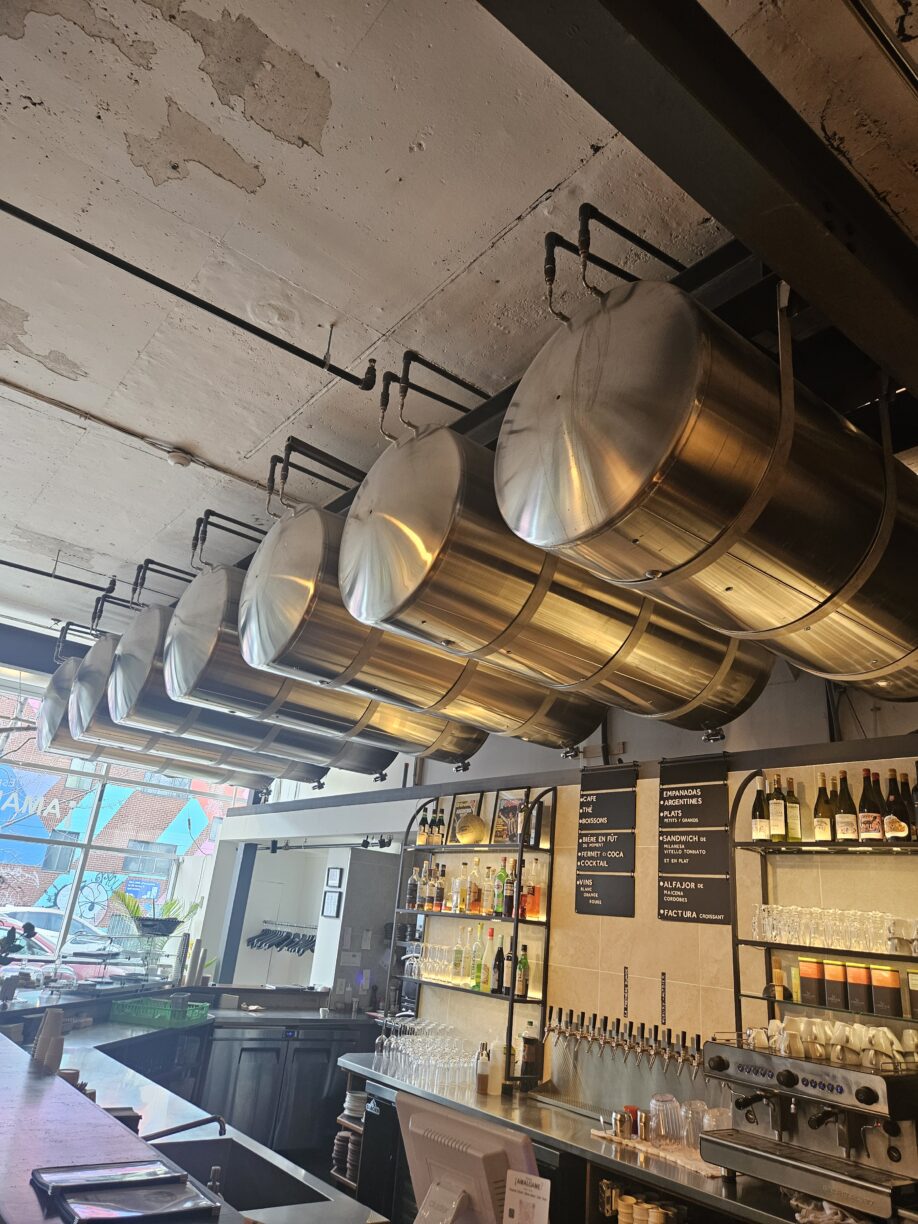
One of the defining features of L’Inconnue is its physical setup.
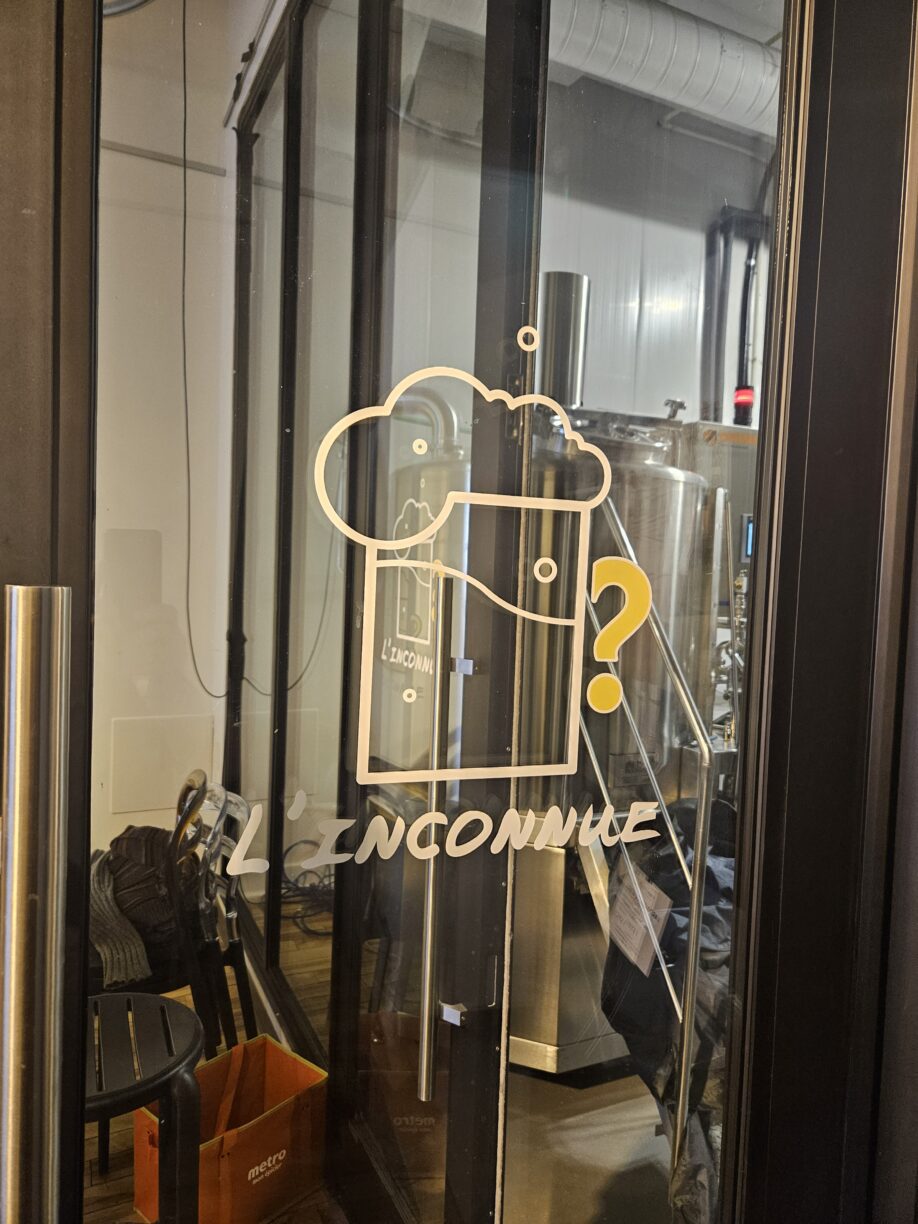
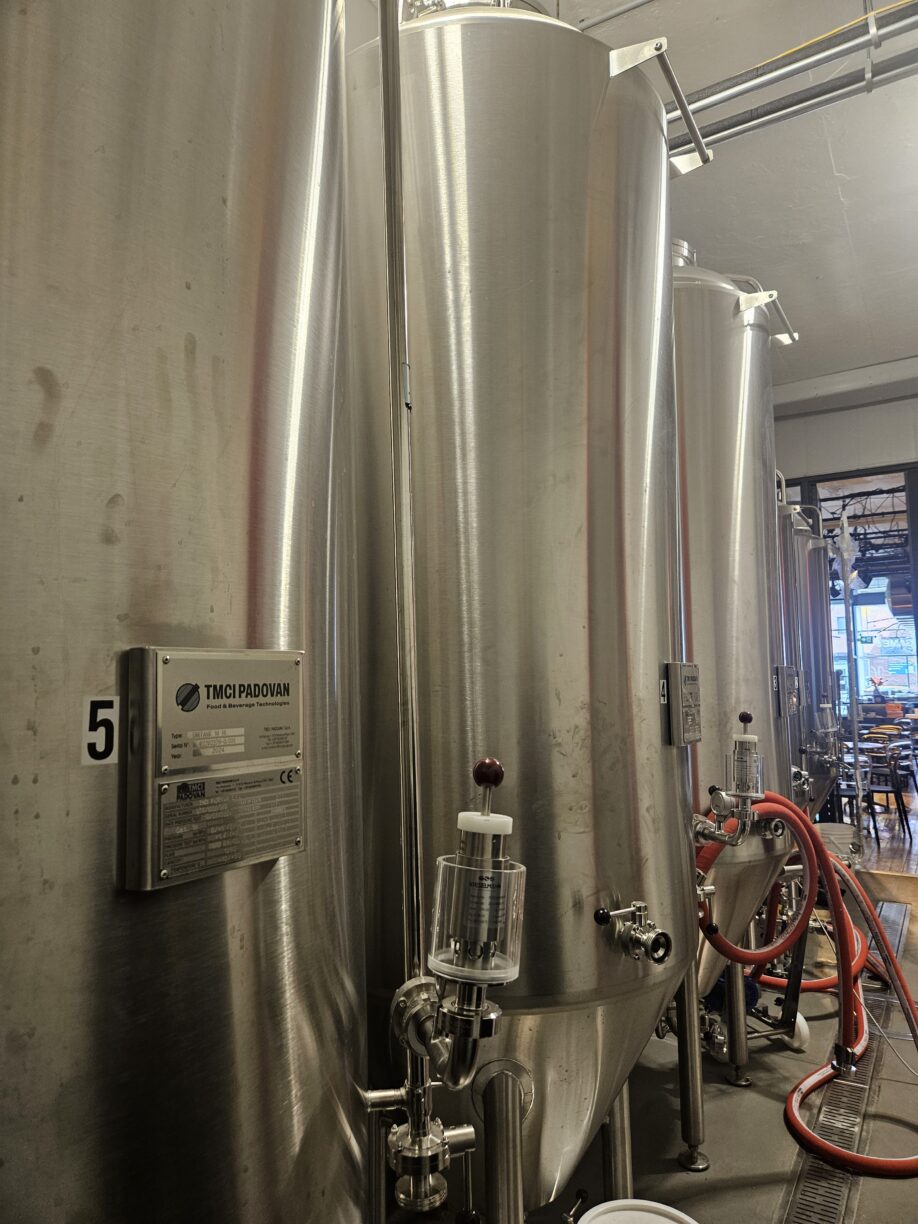
The brewery operates within a constrained urban footprint, requiring a system that is both compact and efficient. The equipment—designed with inspiration from European brewing traditions—prioritizes verticality, modularity, and manual control.
This architectural constraint is not merely technical; it is strategic.
By limiting scale at the infrastructural level, the brewery avoids many of the pressures associated with expansion:
- overproduction
- excess inventory
- staffing complexity
- capital-intensive upgrades
Instead, it operates within a controlled ecosystem where capacity aligns closely with demand.
This alignment is critical in an industry where overextension has become a common risk.
The Cultural Layer
If production defines the backbone of L’Inconnue, culture defines its identity.
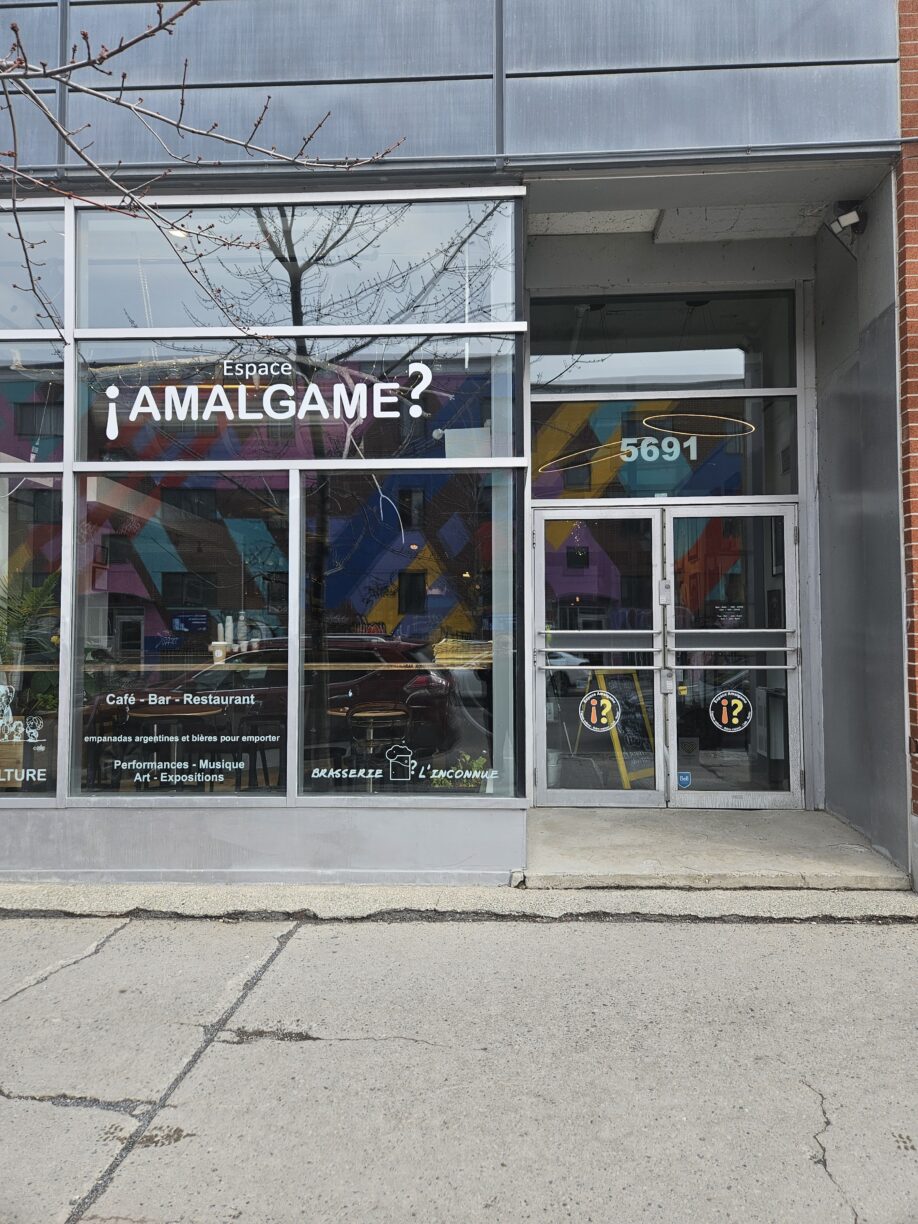
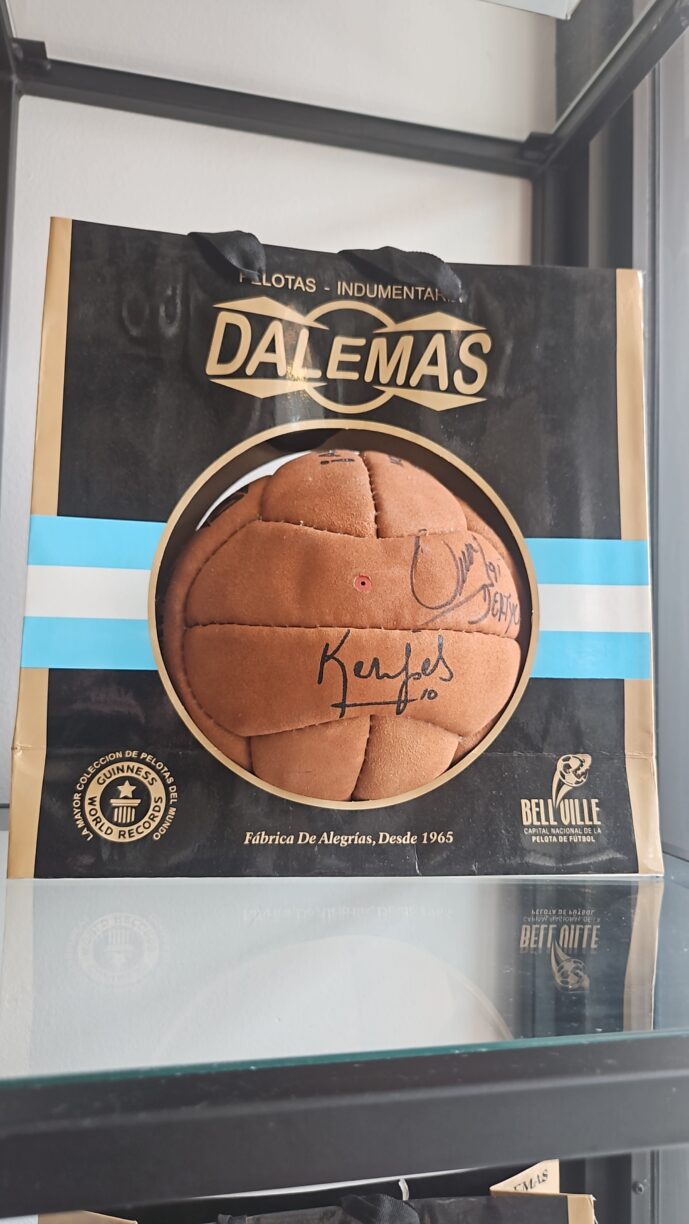
The brewery is integrated into Espace Amalgam, a multidisciplinary venue that hosts art exhibitions, cultural events, and community gatherings. The aesthetic and programming draw heavily from Latin American influences, alongside broader artistic and social themes.
This integration serves multiple functions:
- Differentiation: In a crowded market, a unique cultural identity sets the space apart.
- Audience Diversification: The venue attracts not only beer enthusiasts but also individuals engaged in art, music, and cultural activities.
- Extended Engagement: Events create reasons for repeat visits beyond product consumption.
In this sense, L’Inconnue operates at the intersection of brewery and cultural institution.
This reflects a broader shift in consumer expectations. As experiences become central to value perception, businesses that offer multidimensional engagement gain a competitive advantage.
Beer as Product—and Medium
Within this framework, beer takes on a dual role.
It remains a product, subject to standards of quality, consistency, and craftsmanship. But it also becomes a medium—a way to facilitate interaction, conversation, and shared experience.
L’Inconnue’s brewing philosophy aligns with this perspective.
The focus is on classic styles, executed with attention to detail and adapted to local ingredients where possible. Rather than chasing novelty for its own sake, the approach emphasizes coherence and drinkability.
This is a notable departure from a period in craft beer defined by experimentation and extremes.
As the market matures, there is a growing appreciation for balance, familiarity, and subtlety.
The Ingredient Question
One of the more nuanced aspects of L’Inconnue’s approach is its stance on ingredients.
The brewery prioritizes local sourcing, particularly for grains and hops, while remaining pragmatic when necessary.
This reflects a broader tension within the industry:
- On one hand, local sourcing supports regional economies and reduces environmental impact.
- On the other hand, certain styles and flavor profiles are traditionally associated with specific ingredients from specific regions.
Navigating this tension requires flexibility.
L’Inconnue’s approach—local first, but not dogmatic—mirrors trends in contemporary gastronomy, where chefs increasingly adapt global techniques to local products.
Labor, Pricing, and Transparency
Another dimension of the project lies in its approach to labor and pricing.
The decision to operate without traditional tipping, for example, signals an attempt to rethink compensation structures within the hospitality environment.
This aligns with broader conversations across the service industry regarding wage stability, equity, and transparency.
Pricing, too, reflects a balancing act.
At approximately $10 per pint, the brewery positions itself within a range that must account for:
- rising input costs
- the absence of tipping
- the value of the overall experience
In a price-sensitive market, communicating this value becomes essential.

Industry Pressures
L’Inconnue does not exist in isolation.
It is shaped by—and responds to—the broader pressures facing the craft beer industry:
- Market Saturation: With hundreds of breweries competing for attention, differentiation is critical.
- Retail Consolidation: Fewer products are being carried, and competition for placement is intense.
- Consumer Behavior: Drinkers are exploring alternatives, including non-alcoholic beverages and other categories.
- Economic Uncertainty: Inflation and cost-of-living pressures influence purchasing decisions.
These factors create an environment where traditional growth strategies are increasingly difficult to sustain.

A Shift in Metrics
Perhaps the most significant implication of L’Inconnue’s model is the need to redefine success.
In the expansion era, success was measured by:
- volume produced
- geographic reach
- number of accounts
- brand recognition
In the emerging model, different metrics become relevant:
- customer retention
- frequency of visits
- community integration
- operational sustainability
This shift requires a different mindset—not only for brewers, but for investors, partners, and industry observers.

The Limits of the Model
It is important to note that the hyperlocal model is not universally applicable.
Its success depends on several factors:
- location and foot traffic
- neighborhood dynamics
- cultural positioning
- operational discipline
In less dense areas, or in markets with different consumer behaviors, distribution may remain essential.
Moreover, the model requires a high degree of engagement. Maintaining a dynamic cultural program and a consistent product offering is resource-intensive in its own way.
Toward a More Resilient Industry
Despite these limitations, the emergence of projects like L’Inconnue points toward a broader evolution.
Rather than pursuing uniform strategies, the craft beer industry may be entering a phase of diversification—where multiple models coexist, each adapted to specific contexts.
This diversification could enhance resilience.
By reducing reliance on a single pathway to growth, the industry becomes better equipped to navigate uncertainty.
A Quiet Recalibration
L’Inconnue does not position itself as revolutionary.
It is, in many ways, a return to fundamentals:
- brewing at a human scale
- serving a defined community
- integrating into a broader cultural context
Yet within this apparent simplicity lies a deeper shift.
As the craft beer industry moves beyond its expansion phase, the question is no longer how far a brewery can reach.
It is how deeply it can connect.
In that sense, L’Inconnue is not just a local project.
It is part of a quiet recalibration—one that may ultimately redefine what it means to be a successful brewery in the 21st century.
Espace Amalgame (Brasserie L’inconnue) | 5691 boulevard Saint-Laurent | Montréal | facebook.com |
About Beverage + Terroir
As the beverage and beer industries evolve, so too does the media that covers them. For several years, we’ve been reporting on the industry outside of Quebec in English through our Baron Mag and BBQ (Business of Beer of Quebec) podcasts.
With Beverage + Terroir, we’ve expanded our coverage to encompass beer, beverages, and food, providing a comprehensive look at the entire industry and its complex interconnections. The podcast explores not only trends, innovations, and market shifts, but also the people, places, and processes that define the craft, commercial, and artisanal sectors across Canada, the USA, and beyond.
Beverage + Terroir aims to give listeners a deeper understanding of how local ingredients, regional terroir, and industry dynamics shape the drinks we enjoy — from pint to plate.
_—————
Beer and Brewing — proudly presented by Innomalt, highlighting malt, brewing, and its role in craft and commercial brewing.
Terroir and Industry — brought to you by Pivohub, showcasing the people, places, and processes that define the food production and industry.
Beverage — presented by CanMan, covering trends, technologies, and innovations across the wider beverage landscape.
- Many other things to come.
Together, these partnerships allow Beverage + Terroir to deliver a 360-degree view of the industry, from ingredient to glass, and from local craft to national trends.

