


Trade tensions between Canada and the United States are increasingly shaping not only policy decisions, but also everyday consumer behaviour, particularly in the alcohol and broader beverage sector. 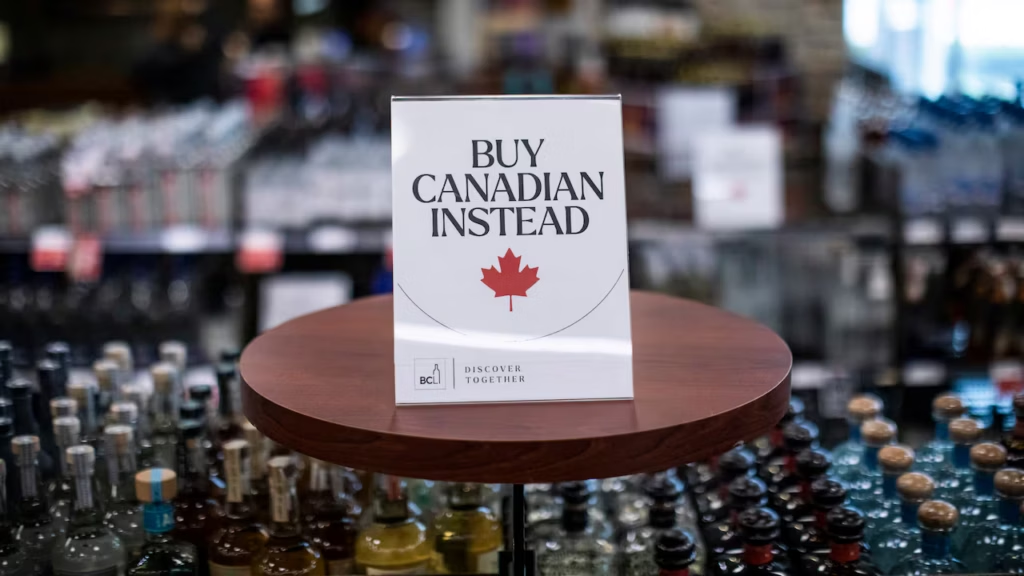
Recent analysis suggests that restrictions on U.S. alcohol products in several Canadian provinces are being interpreted less as isolated regulatory decisions and more as a form of economic signaling, where retail and distribution policies reflect broader political and trade positions. In practice, this has led to reduced availability of American wines, beers and spirits in certain provincial liquor systems, with immediate impacts on shelf presence and sales volumes.
Industry observers argue that alcohol is uniquely sensitive to this type of shift because it operates through tightly controlled provincial distribution systems. Unlike many consumer goods, alcohol listings can be added or removed quickly by government-run liquor boards, making it one of the fastest channels through which trade disputes can be felt at the consumer level.
Beyond policy, consumer sentiment is also playing a role. There is growing evidence of a “buy local” reflex among Canadian shoppers, with some actively choosing domestic alternatives over imported products in response to broader trade and tariff tensions. This behaviour reinforces the perception that beverage purchasing is no longer purely commercial, but also symbolic.
For U.S. producers, the impact can be significant. Loss of listing in provincial liquor boards often means immediate disappearance from an entire market, rather than a gradual decline in demand. This makes Canadian trade friction particularly disruptive compared to traditional tariff-based barriers, as access itself becomes conditional.
At the same time, the situation varies widely across provinces, with some maintaining restrictions while others gradually reopen select product categories. This creates a fragmented national landscape where market access depends heavily on regional policy choices.
Ultimately, the beverage sector is becoming a visible proxy for broader Canada–U.S. economic relations, where consumer choice, retail policy, and trade diplomacy increasingly intersect in real time.
source: thedrinksbusiness.com

