


After seven consecutive quarters of growth, Molson Coors Beverage Company is showing signs of slowdown. Recent results point to declining volumes, partially offset by price increases — a strategy that is becoming harder to sustain in a tightening market.
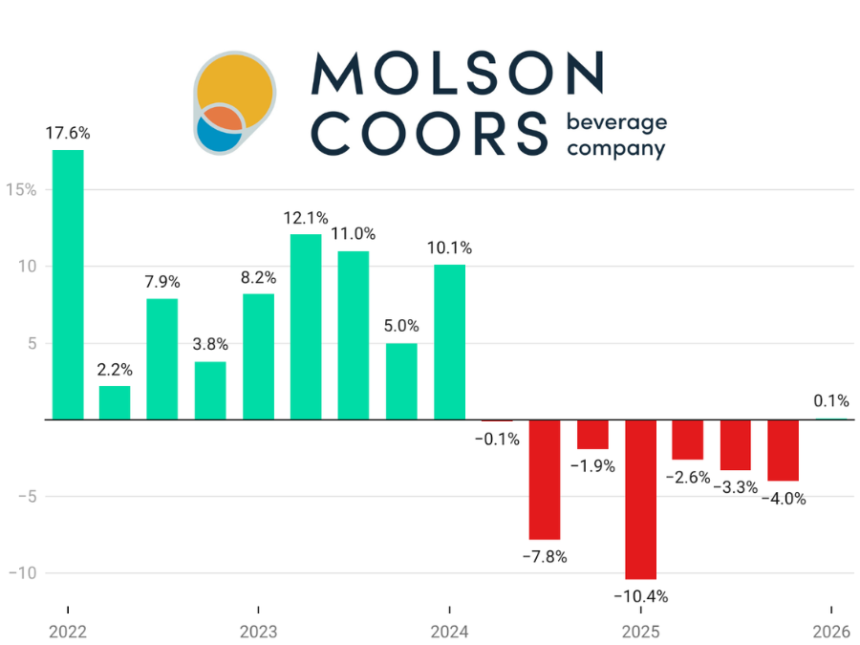
Pricing-led growth hits its limits
The company’s performance highlights a key dynamic:
- volumes are declining
- revenue stability is driven by pricing
- consumer demand remains fragile
As inflation pressures persist, consumers are becoming more price-sensitive, limiting the effectiveness of premiumization strategies.
A structurally shifting market
The slowdown reflects broader category trends:
- stagnant beer consumption in North America
- growing competition from RTDs, spirits, and non-alcoholic beverages
- fragmentation of drinking occasions
Beer is no longer the default choice.
Diversification as a buffer
Molson Coors Beverage Company continues to push into adjacent categories:
- beyond beer innovation
- portfolio optimization
- cost control strategies
These moves help stabilize revenues, but do not fully offset declining core volumes.
Industry signal: entering a constrained phase
This moment signals a broader shift:
- less organic growth
- more operational discipline
- tighter margins
The post-pandemic pricing tailwind is fading.
Conclusion
The trajectory of Molson Coors Beverage Company underscores a critical industry reality: pricing alone cannot sustain growth.
In a saturated and competitive market, success will depend on:
- strategic diversification
- operational efficiency
- maintaining relevance with evolving consumers
The beer industry is no longer in expansion mode — it is entering a phase of optimization.

